
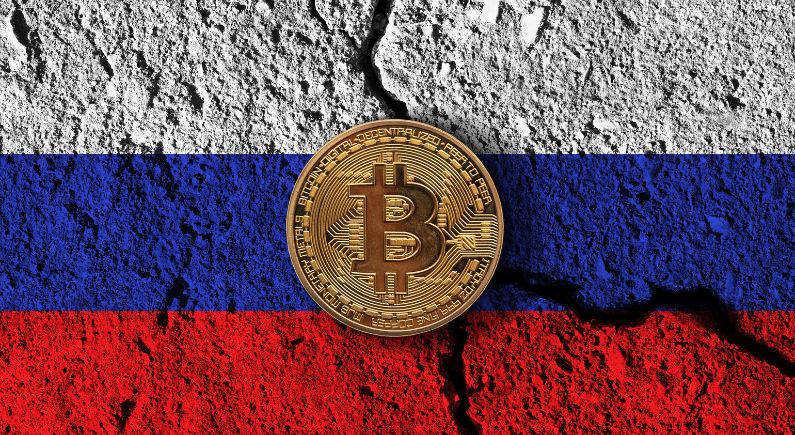
Russian President Vladimir Putin has signed a new federal law “On Digital Currencies and Digital Rights,” establishing a comprehensive regulatory framework for the country’s cryptocurrency market. The law establishes guidelines for investors, clearing houses, brokers, cryptocurrency exchanges, custodians, and other players in digital assets.
Retail investors will be able to buy the most liquid cryptocurrencies up to 300,000 rubles (about $3,700) annually through each intermediary under the new regime. Authorities have not yet stated which cryptocurrency assets will be eligible, though.
According to the Bank of Russia, the main provisions will take effect on 1 September 2026, with additional technical and operational requirements to be implemented during 2027.
The law classifies cryptocurrencies as regulated investment assets but does not recognise them as legal payment for goods and services within Russia. It also introduces licensing requirements, investor protection measures, judicial recognition of crypto ownership, and regulatory oversight of crypto service providers, while continuing to allow the use of cryptocurrencies for certain international trade settlements.
Russian crypto regulations have evolved from ambiguity to a well-defined legislative framework. Prior to this, it was acceptable to own cryptocurrency, but there remained uncertainty over trading, custody, and investor rights. Now that the new law has been passed, players will have a set of responsibilities, and cryptocurrencies will be formally acknowledged in the financial industry.
The government does not consider cryptocurrencies to be legal money, but rather an investment tool. Although cryptocurrency payments are still prohibited, investments, custody, and legal defence against ownership infringement are now permitted.
The new regulatory framework of Russia entails a tough licensing regime that requires exchanges to be registered, have a minimum capital of 15 million rubles (about $185,188), be a member of a self-regulating organisation, and meet the requirements of the Bank of Russia.
Improved reporting and strict compliance criteria are intended to reduce fraud and increase transparency, even if banks must stop any payments that might be made to illegal exchanges and instead send their customers to approved providers.
The increase in cryptocurrency investments is permitted by the new Russian law, but payments are not. Payment for goods, services, intellectual property rights, and other digital rights cannot be made with Bitcoin, Ethereum, or other cryptocurrencies. Due to the need to highlight the ruble’s status as the nation’s sole currency, companies are not allowed to use cryptocurrencies as payment methods.
While maintaining authority over the national currency, the law promotes innovation and investment in blockchain technology. Payments made with cryptocurrency may cause problems with tax collection, monetary policy, and financial stability. Legislators aim to promote innovation without upsetting the financial system by separating the two applications of cryptocurrencies.
According to the legislation, cryptocurrencies are investments rather than cash. Businesses are not allowed to promote digital money as a form of payment since it is unlawful to use it to purchase goods and services. This will ensure that rubles will be the only accepted form of payment in Russia.
Cryptocurrencies can be owned, exchanged, and protected in court since Russia views them as either commodities or securities. They are not seen as money, though. Additionally, cryptocurrency advertising is restricted, making it impossible to get around the prohibitions in any other way.
The law acknowledges that cryptocurrencies can be used for transactions in international trade agreements involving both Russian and foreign residents, even though domestic payments are prohibited. This is due to the fact that cryptocurrency is essential to international business dealings.
Blockchain payments might speed up the settlement process and reduce reliance on traditional banks. The law also permits certain digital financial operations and cryptocurrency from authorised mining.
The law guarantees the legitimacy of cryptocurrency holdings and the holder’s actions. The investor’s rights, including those for possession that had not previously been recognised, will be recognised by the court. Additionally, exchanges, brokers, and custodians must join self-regulatory organisations, obtain the necessary capital, and become regulated businesses under supervision.
The State Duma passed the legislation last month after its first reading in April, bringing crypto trading under direct government oversight. The Bank of Russia has already begun drafting supporting regulations. Just last week, it released proposals for the country’s first framework on “organized trading” of digital assets and digital rights, including requirements for exchanges and depositories.
At the same time, authorities are tightening rules on mining. A recent government decree bans crypto mining and participation in mining pools in Moscow, the surrounding region, and parts of Kursk from 15 August 2026 until the end of 2032.
Russia’s cryptocurrency structure differs from other economies. The Markets in Crypto-Assets (MiCA) regulation establishes licensing and regulatory requirements for customer protection and transparency in the European Union. Cryptocurrency is not accepted as legal tender in any economy, despite the fact that certain nations allow it.
In the USA, cryptocurrencies are regulated by multiple institutions, depending on the specific asset, rather than a single statute. Depending on the asset in question, banking, securities, commodities, and anti-money laundering legislation are applicable. Nevertheless, the rule is still ambiguous despite the legislative actions taken to establish more precise national standards. Russia has a well-regulated and managed system.
Singapore uses sandboxes in Asia to promote fintech innovation while enforcing strict licensing requirements. Trading platforms and retail use are licensed in Hong Kong under certain conditions. Based on its Payment Services Act, Japan was among the first nations to implement exchange regulations. Regarding licensing and investor protection, Russia and these states are very similar.