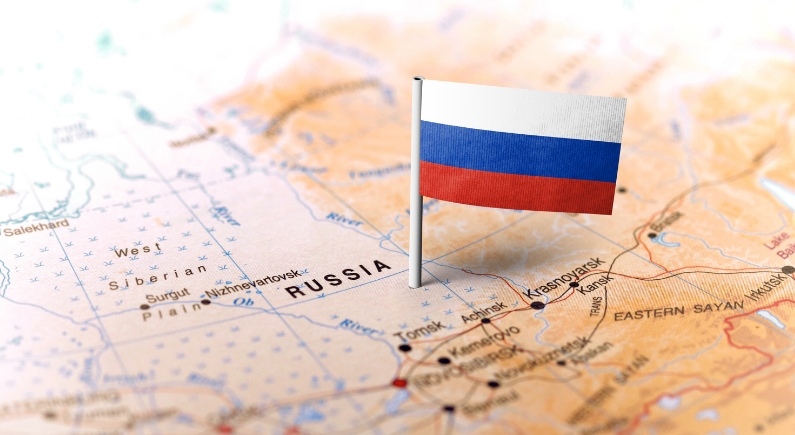
Russia has expanded its restrictions on cryptocurrency mining, banning mining operations in Moscow, Moscow Oblast, and several districts of the Kursk region from 15 August 2026 through 31 December 2032.
The new resolution aims to reduce pressure on regional power grids and ensure long-term energy security. Authorities said large-scale cryptocurrency mining has increased electricity demand and could strain infrastructure in high-consumption regions.
Prime Minister Mikhail Mishustin signed Government Resolution No. 936 on 25 July 2026, which expands the list of limitations that apply to cryptocurrency mining in Russia. The revised restrictions, which prohibit mining in areas with power shortages, replace those implemented in 2024. On 15 August 2026, mining and mining pools will be outlawed in Moscow, the Moscow region, and some Kursk Oblast districts.
Unlike other seasonal bans, the new regulation imposes a ban lasting up to 2032. The government believes that power consumption will stay high for years to come and that it is safer not to wait until more problems occur but impose a ban now. Mining companies have the choice of relocating equipment, stopping mining, or paying fines.
The new mining restrictions in Russia cover Moscow, the Moscow Oblast, and several districts in Kursk, including Belovsky, Bolshesoldatsky, Glushkovsky, Korenevsky, Lgovsky, Rylsky, Sudzhansky, Khomutovsky, and the City of Lgov, where mining is now prohibited. Authorities say these areas were chosen because expanding data centres and mining activity would put heavy strain on local electricity infrastructure.
The mining firms located in Moscow and other specific areas will be directly impacted by this more stringent prohibition. The mining companies that have invested heavily in hardware, cooling, warehousing, and energy infrastructure will have to either shut down or relocate abroad.
Relocation is expensive and difficult. It is necessary to relocate thousands of ASIC miners, obtain new facilities, establish contracts for electricity, and rebuild cooling systems. Smaller businesses may find it difficult to survive during this downtime, which lowers profitability and may cause larger companies to consolidate.
In order to stabilise the miners’ income, this prohibition will also apply to joining mining pools. This has been accomplished by outlawing both direct and indirect mining.
Instead of taking a sudden turn, Russia’s current policy exhibits progressive changes. The nation legalised cryptocurrency mining in 2024 by enacting a governmental framework that mandates taxation and registration for any commercial venture. Individuals were also allowed to mine as long as they didn’t use more power than usual.
Recognising Russia’s advantages in producing power and its cold climate, which lower mining costs, the decision seemed sensible. Although they stressed that infrastructure stability and energy security must continue to be top concerns, officials recognised controlled mining as a way to create income and jobs.
Regional governments have begun requesting restrictions based on local electricity shortages after the legalisation. Due to a lack of electricity, mining has occasionally been temporarily prohibited in areas like the North Caucasus, Siberia, and other energy-scarce locations. Russia is adjusting its stance rather than stopping the legalisation process.
Russia’s decision to expand mining restrictions is driven largely by rising electricity demand from modern data centres. Mining is no longer the only energy-heavy digital industry. AI, cloud computing, streaming, enterprise software, and government services all require powerful infrastructure. Moscow has become a hub for these activities, with dozens of data centres already consuming hundreds of megawatts of power. Forecasts show demand will continue to rise as businesses digitise and AI spreads.
Authorities have stated that if mining is permitted to coexist with these industries, demand may rise past safety limits. Compared to cloud and corporate services, mining has less of an impact on the local economy because it only uses energy to create digital assets.
Policymakers see it as a less efficient use of scarce energy compared to industries that support broader economic activity. The restrictions, therefore, reflect a strategy of allocating electricity to sectors with greater public and economic impact.
While mining is not outright forbidden throughout the nation, it is instead redirected away from places like Moscow and others. Due to the availability of additional hydroelectric power and lower temperatures, mining operations may very well take place in areas with substantial energy resources, such as Siberia and the Far East.
A larger worldwide trend is reflected in Russia’s strategy. Governments are attempting to strike a balance between concerns about grid reliability and electricity consumption and blockchain innovation. In 2021, China outlawed Bitcoin mining nationwide, forcing many businesses to relocate abroad. Later, once its power grid was pressured by rising electricity demand, Kazakhstan tightened mining laws.
Large Bitcoin mining sites must now comply with more stringent environmental assessment and permission criteria in a few US jurisdictions. In the meantime, Norway and Iceland are still assessing how their energy infrastructure will be affected by the rising demand for data centres and Bitcoin mining.