
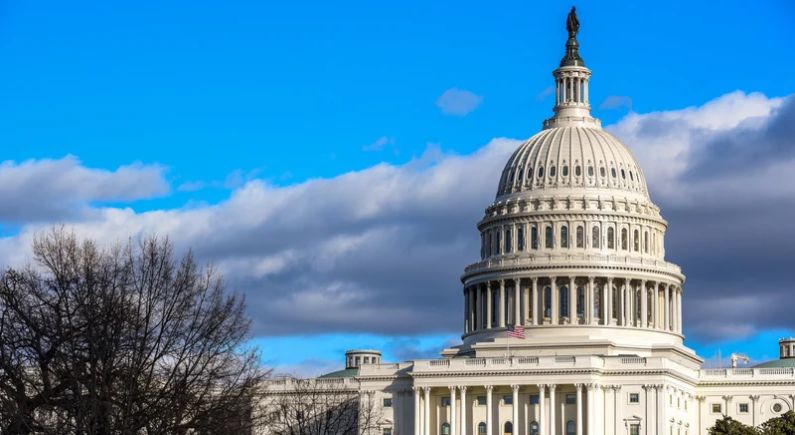
The U.S. Senate has blocked an attempt to advance the Clarity Act, dealing a setback to the cryptocurrency industry’s push for a federal market structure framework.
Senators voted 49-50 on Tuesday against invoking cloture on the motion to proceed. The procedural measure, which required 60 votes, would have limited debate and allowed the Senate to begin considering the legislation.
The result was not a vote on the Clarity Act’s final passage. However, it prevents the current version from moving forward unless Senate leaders bring it back and secure broader support.
All Democrats present voted against the motion, alongside Republican Senators Susan Collins, Josh Hawley and Jerry Moran. Republican Senator Thom Tillis initially supported the motion before changing his vote for procedural reasons.
The Clarity Act sought to establish a federal framework for cryptocurrency markets and define the respective responsibilities of the Securities and Exchange Commission (SEC) and the Commodity Futures Trading Commission (CFTC). It would also have addressed legal questions over whether different digital assets should be treated as securities or commodities.
The vote followed months of negotiations over political ethics, safeguards against illicit finance, stablecoin rewards and protections for software developers.
Republicans released revised legislation ahead of the vote, saying it included 126 substantive changes sought by Democrats. The changes covered ethics rules, developer protections and agricultural provisions, while introducing a mechanism intended to respond if stablecoin rewards caused deposits to leave community banks.
The revised ethics provisions would have required covered public officials to divest certain cryptocurrency interests or place them in a qualified blind trust. They would also have expanded the rules to elected officials who had not yet taken office, as well as their spouses.
Democrats maintained that the measures did not go far enough, particularly in addressing President Donald Trump’s financial interests in cryptocurrency.
Senator Elizabeth Warren said the United States needed cryptocurrency legislation that confronted political conflicts of interest and protected the financial system.
“We need crypto regulation. Yes, we do. But we do not need a crypto bill written by the crypto industry to benefit only the most extreme voices in the crypto industry and at the expense of our national security, our economic stability,” Warren said during her Senate speech.
She also argued that the bill could weaken investor protections, expand banks’ exposure to risky digital-asset activities, and make it harder for states and tribal nations to enforce their own consumer protection laws.
Stablecoin rewards emerged as another barrier to an agreement.
Banking groups argued that rewards offered by cryptocurrency companies could pull deposits away from traditional lenders, reducing the funding available to community banks. Eight banking trade groups rejected the revised bill’s proposed safeguard, saying it would take effect only after deposit outflows had already occurred.
Cryptocurrency companies disputed that position, arguing that banks were trying to limit competition from stablecoin-based financial products.
The Clarity Act would have complemented the GENIUS Act, which already provides a federal framework for stablecoins. However, the two measures address different parts of the digital asset market.
Coinbase CEO Brian Armstrong described the Senate result as disappointing but said the industry could no longer depend on Congress to provide a regulatory framework.
“While it’s possible bi-partisan conversations continue, and it lives to fight another day, we can’t wait on Congress anymore,” Armstrong wrote on X. “The SEC and CFTC have the tools they need to create clear rules under existing authority, and I expect will begin working on this in earnest. So clarity is coming to crypto regardless.”
Armstrong added that some concessions made during negotiations had been difficult for the industry to accept. He said cryptocurrency companies would continue working to modernise the financial system as regulators develop rules under their existing powers.
The failed vote triggered losses across cryptocurrency markets, according to Bloomberg. Coinbase shares closed 10 per cent lower, while stablecoin issuer Circle Internet Group fell by more than 11 per cent.
Bitcoin dropped as much as 5.3 per cent and briefly traded below $75,000.
The market reaction came amid a broader downturn driven by tighter liquidity, weaker risk appetite and growing investor interest in artificial intelligence. The Clarity Act had been viewed as a potential catalyst for acquisitions, product launches, and U.S. expansion by providing clearer legal boundaries.
Senate leaders could attempt to revive the Clarity Act, but they would first need to overcome the procedural hurdle that defeated it.
The congressional calendar also presents a challenge. Lawmakers have only a limited number of working days before attention turns towards the midterm election campaign.
Even if the Senate approves a revised bill, it would have to return to the House of Representatives because the Senate text differs from the version previously passed by the lower chamber. Both chambers would need to approve identical legislation before it could be sent to Trump.