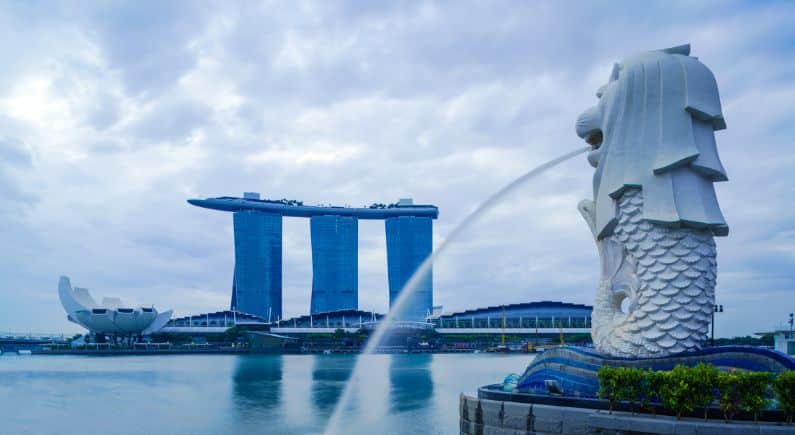
The Monetary Authority of Singapore (MAS) is reviewing its capital framework for cryptocurrency firms as part of efforts to strengthen oversight of the digital asset sector. In order to ensure that licensed crypto service providers have adequate financial buffers to handle risks including market volatility and operational breakdowns, the proposed modifications seek to clarify capital requirements.
The Payment Services Act, which governs cryptocurrency operations in Singapore, mandates licensing, adherence to anti-money laundering regulations, and consumer protection measures. As authorities react to the expanding size and complexity of digital asset markets, the most recent assessment expands upon this framework. According to officials, the action is a part of a larger plan to strengthen Singapore’s standing as a regulated centre for fintech and cryptocurrency activity while striking a balance between innovation and financial stability.
The Basel Committee on Banking Supervision has set out rules on how banks should treat crypto assets in their capital calculations. The framework is intended to guarantee that banks have sufficient capital to offset possible losses resulting from volatile exposures. Global regulators concur that there are hazards associated with cryptocurrency, such as fluctuations in price, weaknesses in technology, and difficulties with liquidity. Although deadlines differ by jurisdiction, it was originally anticipated that these criteria would be implemented in January 2026.
Group 1 consists of some stablecoins and tokenised traditional assets. Because real-world assets support them or preserve price stability through reserves, these are regarded as lower risk. Lower capital requirements apply to banks that deal with these assets.
Group 2 includes cryptocurrencies like Ethereum, Bitcoin, and the majority of tokens on open blockchains that are unstable or unsupported. These are regarded as high-risk, and full capital deduction is frequently required due to severe capital charges. They are not considered stable financial instruments in a regulatory sense, but rather speculative holdings.
The goal is to adapt worldwide regulatory standards to Singapore’s unique financial landscape. Regulators warn that applying Basel’s framework unaltered might stifle innovation, particularly for blockchain-based assets that do not neatly fit into established categories. They advocate for a more flexible approach instead of depending on Basel’s strict classification system, warning against categorising all permissionless blockchain assets as high-risk Group 2 securities.
According to the proposal, if specific criteria are met, some cryptocurrency assets may be eligible as Group 1. As a result, their risk weights could be lower than those of other digital assets. A more sophisticated framework that strikes a compromise between risk management and room for innovation is presented in the proposal. The result may have an impact on how Singaporean institutional players interact with cryptocurrency assets.
Under Basel rules, cryptocurrencies on permissionless blockchains such as Bitcoin and Ethereum are generally classified as high risk. The reasons include a lack of centralised control, significant price volatility, and uncertain regulatory support. Heavy capital requirements discourage banks from holding these assets. The MAS has proposed a structure that is more adaptable. Rather than immediately labelling all permissionless assets as high-risk, MAS suggests assessing them based on predetermined standards.
Lower-risk holdings could include assets that exhibit stability, transparency, and efficient risk management systems. In contrast to Basel’s general regulations, this would enable banks to impose less onerous capital requirements. The proposal reflects the view that blockchain technology has evolved. Some newer assets exhibit stronger governance, improved liquidity, and more reliable infrastructure than earlier cryptocurrencies.
The MAS has proposed strict limits on banks’ exposure to crypto assets. Reclassified assets cannot exceed 2 per cent of a bank’s Tier 1 capital, serving as a safeguard against excessive risk. Additional controls apply to banks issuing crypto assets that create liabilities on their balance sheets. Such issuance must remain below 5 per cent of Tier 1 capital. These measures are designed to prevent banks from taking on disproportionate risks while allowing limited participation in the crypto sector.
The MAS initially intended to follow Basel’s 2026 timeline, but following input from the industry, implementation has been rescheduled until 2027. A smoother adoption process and time for modifications are made possible by the delay. The delay allows for more time for changes and a more seamless adoption process. MAS’s methodology may have an effect on how bitcoin assets outside of Singapore are classified. By giving Basel’s framework more flexibility, the proposal may have an impact on future international standards.
Singapore’s attempt to strike a balance between risk management and innovation is reflected in the consultation. The nation’s place in the changing environment of digital finance will depend on how the framework is implemented.