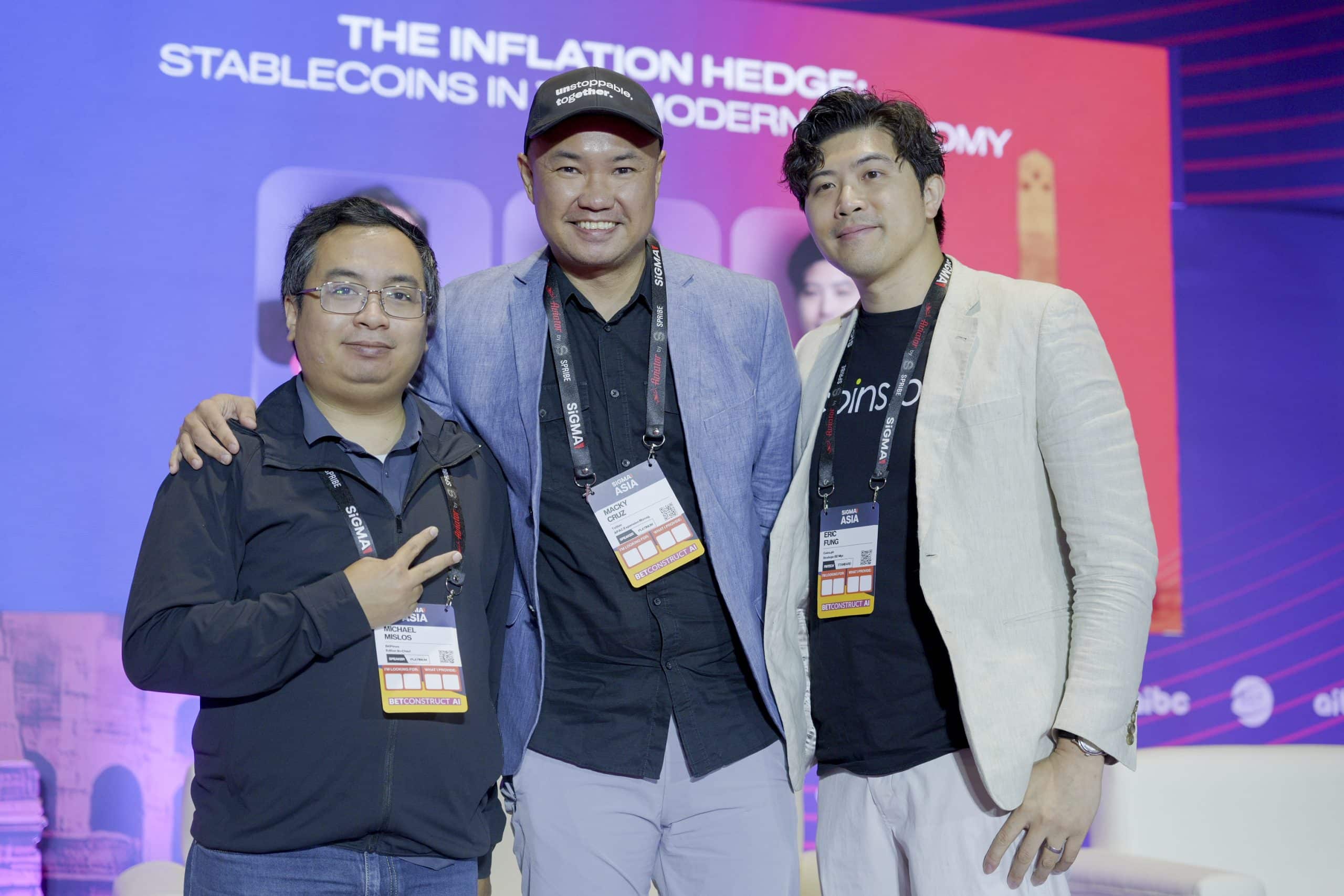
The SiGMA Asia 2026 Summit hosted several panel discussions on how stablecoins will change the way that companies do business and how consumers interact with banks and other financial service providers. The panel discussion titled “The Inflation Hedge: Stablecoins in the Modern Economy” featured industry leaders such as Michael Mislos, editor-in-chief of BitPinas; Macky Cruz, APAC expansion manager at Tether; and Eric Fung, global strategy manager at Coins.ph.
The panelists discussed whether stablecoins can add genuine economic value beyond being just a vehicle for speculative trading and become viable financial tools for the millions of people living in today’s inflation-heavy economy.
The discussion opened with a focus on the growing demand for dollar-denominated assets in countries experiencing currency depreciation and economic uncertainty.
In many parts of Asia, access to foreign-currency savings remains limited, particularly for unbanked and underbanked populations. Stablecoins are increasingly filling that gap by offering a digital alternative accessible via a smartphone and an internet connection.
Panellists noted that in inflation-prone markets, consumers are no longer turning to stablecoins purely for cryptocurrency trading. Instead, they are using them to preserve value and protect savings from the effects of weakening local currencies.
The ability to hold a digital representation of a stable asset has created new opportunities for individuals seeking financial stability without relying on traditional banking infrastructure.
One of the themes frequently discussed in this session was how stablecoins will help make international payments more efficient.
Many traditional remittance systems employ multiple intermediaries, settle transactions over extended periods, and charge excessive transfer fees. The Philippines is one example of an emerging market, where remittances are a major source of household income and play an important role in driving economic activity. The delays and high costs associated with traditional remittance methods create unnecessary burdens on families sending and receiving money.
According to the panelist speakers, the introduction of stablecoins as payment rails enables fast, cost-efficient cross-border transfers, providing better opportunities for migrant workers, freelancers, international companies, and other digital entrepreneurs who regularly send money internationally.
Compared to a traditional bank, which can take up to several days to clear your funds, using stablecoins allows you to transact instantly (within minutes) while providing full visibility through the blockchain, showing where the money was sent.
With growing interest among individuals and businesses in using them, many see stablecoins as more than just another cryptocurrency; they are an effective means of conducting financial transactions.
Financial inclusion emerged as one of the panel’s most important themes.
Millions of people throughout Asia remain underserved by traditional financial institutions. Geographic limitations, documentation requirements, and high account maintenance costs continue to create barriers to participation in the formal economy.
The speakers believe that Stable Coins could create a better way for people to use digital financial services without requiring an extensive relationship with a bank.
Through accessible mobile platforms, users will be able to receive payments, transfer money, maintain savings, and participate in digital commerce, which is critical in parts of the world where smartphone penetration far exceeds access to traditional banking.
The Panel indicated that Stablecoins could serve as a gateway for others to begin their journey into the financial system through Digital Payments, Lending, and the emerging Web3 Ecosystem.
While there are chances for growth, regulatory clarity is needed before any increase in stablecoin use can occur.
As stablecoins become more widely used beyond just being traded for other cryptocurrencies, most of the Asian governments/financial regulators have started looking into them. In fact, most regulatory frameworks are changing in areas such as consumer protection, reserve transparency, Anti-money laundering compliance, and the potential for systemic risk in the financial system.
The speakers emphasised that responsible growth requires collaboration between regulators, stablecoin issuers, exchanges, and financial institutions.
Clear regulations can help build trust while encouraging innovation, creating an environment where businesses and consumers can confidently utilise stablecoin-based solutions.
Rather than viewing regulation as an obstacle, the panel positioned it as a necessary foundation for long-term adoption.
A key takeaway from the session was that stablecoins are gradually transitioning from a niche crypto instrument into an essential layer of modern financial infrastructure.
Stablecoins are becoming recognized for their ability to solve economic issues for individuals and businesses throughout Asia, whether used for hedging against inflation, making international payments, or enabling people to access financial services.
As the digital finance space continues to change, discussions about stablecoins in Manila showed that leaders from the industry have reached a strong agreement that stablecoins have the potential to move beyond just being a bridge between the traditional financial system and cryptocurrency; they can become an independent financial instrument that provides efficiency and much-needed flexibility in an increasingly interactive economy.
With adoption accelerating and regulatory frameworks taking shape, stablecoins are positioning themselves at the forefront of the next chapter in global finance.
For more insights from the world’s leading gaming, technology, and emerging technology events, visit the SiGMA website at https://sigma.world/.