
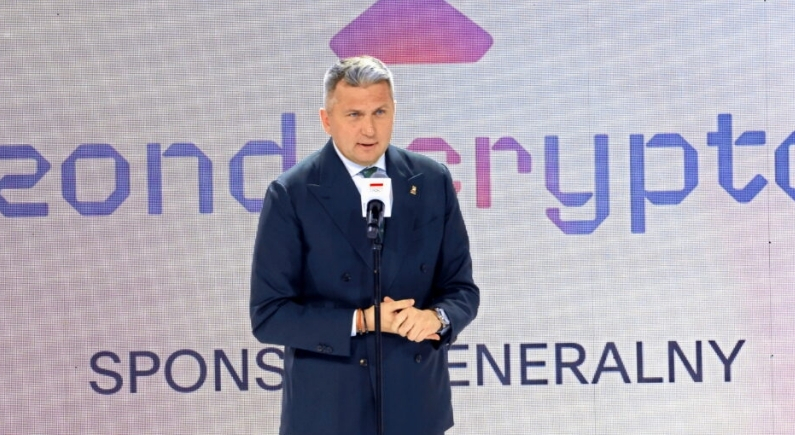
Radosław Piesiewicz, president of the Polish Olympic Committee, was detained on 27 August 2026, as part of an investigation into alleged improper financial benefits linked to sponsorship arrangements involving cryptocurrency platform Zondacrypto.
Polish prosecutors are investigating the possibility of illicit financial transactions involving business, sports, and politically linked individuals. The accusations have not been proven in court, and Piesiewicz has denied any misconduct.
The inquiry is focused on the accusations that Radosław Piesiewicz had been getting favours from individuals connected with Zondacrypto through their sponsorships. The prosecutors are considering whether these favours were improper payments or any other forms of advantages offered in return for their backing in connection with the company.
Polish prosecutors launched the wider Zondacrypto investigation in April, initially focusing on suspected fraud involving customers and the handling of potentially illicit funds.
One key allegation involves a luxury Swiss watch valued at about €40,000. Polish authorities have identified the watch as one of the personal benefits under review. According to reports, Piesiewicz denied the allegation and said he purchased the watch himself. Prosecutors are investigating whether it was linked to Zondacrypto’s former leadership.
Dziś w ramach śledztwa w sprawie ZondaCrypto zatrzymany został Radosław P.
Prokuratura będzie przekazywała dalsze informacje po zakończeniu czynności z jego udziałem, prowadzonych w Śląskim Wydziale PZ PK.
— Waldemar Żurek (@w_zurek) August 27, 2026
Polish prosecutors said the suspected losses have reached at least 350 million zlotys, or about €80 million. The Regional Prosecutor’s Office in Katowice opened the case in April following complaints from customers who reportedly had trouble accessing or withdrawing their funds. Prosecutors are investigating claims that users were misled about their ability to buy and store both fiat currencies and cryptocurrencies on the platform.
Prosecutors said thousands of customers may be potential victims. By June, authorities had received more than 3,600 criminal complaints, interviewed nearly 1,000 victims, and secured more than 250 terabytes of data from production servers. Investigators had also carried out dozens of searches and formed a joint investigation team with Estonian authorities.
According to Polish prosecutors, the investigation includes allegations that customers were misled about the ability to buy and store traditional currencies and cryptocurrencies through the exchange.
Prosecutors said the company’s owner indicated that since 2022, Zondacrypto has not had access to a cold wallet reportedly holding around 4,500 BTC. Authorities allege that customers were not informed of this situation.
The accusation is significant since cryptocurrency exchanges depend on users’ trust that the assets displayed in their accounts can be accessed upon request for withdrawals. While withdrawal requests are still low, a platform may seem stable, but an increase in withdrawals might soon reveal liquidity issues.
Przemysław Kral, the former chief executive of Zondacrypto, has reportedly denied any wrongdoing and said that the platform’s liquidity problems were caused by a rise in withdrawal requests after what he called a politically driven campaign against the company.
The political focus on Zondacrypto increased because the company reportedly sponsored events connected to Poland’s right-wing political circles. It also had financial ties to foundations and media organisations associated with figures in the conservative opposition.
One example was the company’s sponsorship of Poland’s first Conservative Political Action Conference (CPAC), held ahead of last year’s presidential election. The event featured prominent international conservative figures and gave additional visibility to the right-wing political camp.
Zondacrypto also provided advertising funding to TV Republika, a popular right-wing broadcaster in Poland. The channel’s majority shareholder, Tomasz Sakiewicz, has denied wrongdoing and said the arrangement was a standard advertising deal, with commercial terms kept confidential.
President of Poland Karol Nawrocki, backed by the right-wing Law and Justice party, vetoed legislation that would have introduced new rules for the country’s crypto-asset market. Official presidential records show that Nawrocki rejected the crypto-assets market bill in June.
According to Nawrocki, stricter regulations will drive bitcoin companies out of Poland and reduce Poland’s competitiveness. Prime Minister Donald Tusk’s Polish administration, however, believes the opposite.
The dispute intensified after the collapse of Zondacrypto, which had financial ties to organisations linked to the right-wing political camp. Tusk has suggested that Nawrocki’s opposition to the legislation may be connected to the company’s political support. Nawrocki has denied that claim, saying his position on the bill predates the scandal.