Artificial intelligence (AI) is no longer a futuristic concept confined to Silicon Valley laboratories. It is rapidly becoming the engine powering modern business operations, from customer service automation and content generation to logistics, marketing, and enterprise productivity. Yet despite the explosive growth of AI tools across industries, one challenge continues to slow adoption worldwide: trust.
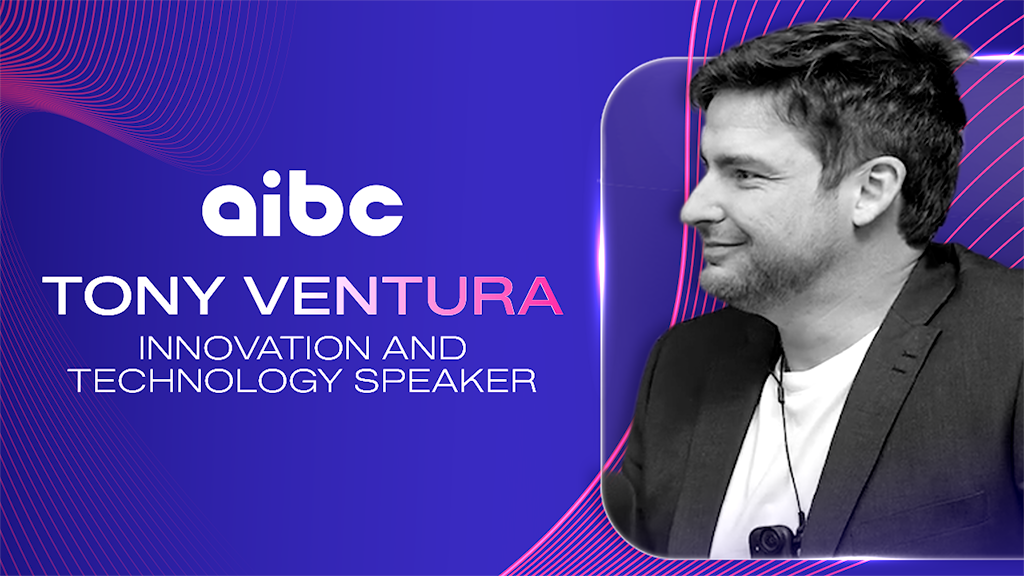
“AI is no longer about the future, it’s about who is willing to adapt faster,” said, innovation and technology speaker, Tony Ventura, speaking exclusively at AIBC Eurasia 2026.
“The biggest challenge of the digital economy is trust,” Ventura said. “People know about AI, but they are not using it. People know the power of AI, but they are afraid.”
From generative AI assistants to emerging “AI agents,” the technology is evolving faster than many organisations can adapt. Ventura argued that while businesses increasingly understand the economic value of AI, many individuals and companies remain hesitant to fully embrace it.
For Ventura, the disruption caused by AI can be summarised in two simple concepts: saving time and saving money.
He believes AI’s most immediate impact is not replacing humans entirely, but dramatically accelerating productivity. According to Ventura, workers and businesses that adopt AI tools today are already operating at speeds that traditional workflows cannot match.
“The person who is using AI will work for three days or four days while you are working for two or three months,” he explained.
That productivity gap is becoming increasingly visible across industries. Companies are deploying AI systems to automate repetitive administrative tasks, generate reports, analyse customer data, and manage communication flows. Businesses that once required large teams for routine operations are now able to streamline processes with smaller, AI-assisted workforces.
(Source: AIBC World/YouTube)
However, Ventura cautioned against believing the hype around fully autonomous businesses. While automation is improving rapidly, he emphasised that human oversight remains essential.
“Don’t think about fully automating things,” he said. “We still need humans, and we’re going to need humans for a long time.”
Instead, he sees the near future as one of collaboration between humans and AI systems, where automation handles repetitive tasks while people focus on strategy, creativity, and decision-making.
According to PwC, AI adoption could boost global Gross Domestic Product (GDP) by up to 15 percentage points by 2035, roughly equivalent to adding an extra percentage point to annual global economic growth. However, the firm noted that AI’s economic potential “hinges not just on its capabilities, but on the ability to deploy it responsibly and earn society’s trust.”
One of the most significant trends Ventura highlighted is the emergence of AI agents, autonomous systems capable of handling workflows, communicating with software platforms, and executing tasks with minimal human intervention.
Unlike basic chatbots or virtual assistants, AI agents are designed to perform multi-step processes. They can connect to email systems, calendars, messaging apps, and social media platforms simultaneously, enabling businesses to automate large portions of their operations.
Ventura described a future where both companies and individuals maintain their own central AI agent, trained with customised knowledge and connected to other specialised AI systems.
“In the future, every single person will have one big AI agent for them,” he predicted.
He compared these future AI agents to raising a child. Just as parents invest in education and training for their children, individuals and companies will “feed” AI systems with information, specialised knowledge, and strategic direction.
A global survey shows the productivity shift Ventura described is already underway. McKinsey’s 2025 State of AI report found that 88 percent of organisations are now using AI in at least one business function, compared to 78 percent a year earlier. However, most companies remain in the experimentation phase, with only around one-third reporting that they have successfully scaled AI across the enterprise.
“We’re going to buy online courses for AI agents,” Ventura said. “We will feed the AI agents with knowledge.”
Still, Ventura believes current AI agents remain far from perfect. Many systems struggle with reliability, reasoning accuracy, and contextual understanding. As a result, businesses should focus on partial automation rather than expecting AI to completely replace human teams.
“The AI is not perfect yet,” he said. “They are still learning.”
Despite rapid advances in AI capability, Ventura argues the technology’s greatest obstacle is not innovation but human psychology.
For many workers and business owners, AI adoption requires abandoning familiar processes and trusting systems they do not fully understand. Concerns around misinformation, job displacement, data privacy, and reliability continue to shape public perception.
Ventura believes the solution lies in exposure and education rather than technical explanations alone.
“The first thing is people need to try it,” he said. He compared AI adoption to fitness and nutrition. Most people already understand the benefits of exercise and healthy eating, yet many still struggle to change their habits. AI, he argues, faces a similar behavioural challenge.
To overcome that barrier, Ventura believes influencers, content creators, and educators will play a major role in normalising AI use.
“We need content creators and influencers to talk with people and say, ‘Use that, try something new,’” he explained.
According to Ventura, AI adoption spreads socially. When one person experiences meaningful benefits from AI tools, they often encourage others around them to experiment as well. That creates a ripple effect that can gradually reduce fear and resistance.
This idea reflects broader trends in consumer technology adoption, where public trust often develops through peer recommendation and practical demonstrations rather than corporate marketing alone.
Ventura also stressed that businesses and entrepreneurs do not need advanced engineering knowledge to begin integrating AI into their workflow.
Instead of focusing solely on complex enterprise systems, he encouraged people to start with simple productivity tools that solve everyday problems.
As an example, he referenced an AI-powered WhatsApp productivity assistant that automatically schedules meetings, creates reminders, and delivers voice call notifications.
For Ventura, tools like these demonstrate how AI can quietly improve efficiency without dramatically changing existing habits.
“You don’t need to watch notifications every single day,” he said. “You save time.” This practical approach may ultimately prove more effective in driving adoption than futuristic promises about artificial general intelligence or fully autonomous workplaces.
Ventura’s warnings also highlight a growing divide emerging within the global economy: the gap between organisations that actively adopt AI and those that hesitate.
As AI tools continue reducing operational costs and accelerating execution speed, businesses resistant to experimentation risk falling behind competitors already integrating automation into daily workflows.
The technology itself is becoming increasingly accessible. AI-powered systems that once required specialised engineering teams are now available through subscription platforms and consumer applications.
For Ventura, the challenge is no longer access to AI technology, it is convincing people to trust it enough to begin using it.
“Clear communication is the first step of everything,” he said.
As AI reshapes industries ranging from finance and healthcare to entertainment and education, that communication challenge may determine how quickly societies adapt to the next phase of the digital economy.
The race to build smarter AI systems is already underway. But according to Ventura, the companies and countries that succeed may ultimately be the ones that learn how to build human confidence alongside technological innovation.