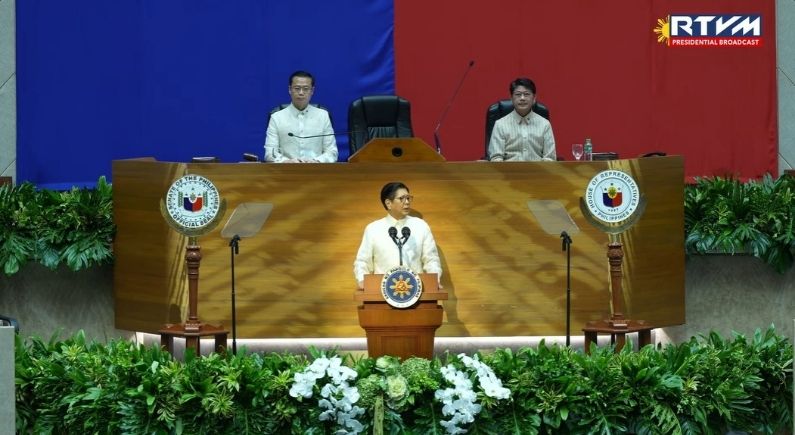
Philippine President Ferdinand Marcos Jr. placed artificial intelligence (AI) and digital transformation at the heart of his fifth State of the Nation Address (SONA), outlining how the government plans to use emerging technologies to modernise public services, strengthen disaster response, improve education and position the Philippines in the global digital economy.
Speaking before Congress on Monday, Marcos said the country must embrace AI while ensuring Filipinos have the skills to compete in an increasingly technology-driven world.
“AI is here to stay; and so, we adopt it to harness its potential to enhance critical sectors, from our educational system to our industries,” Marcos said.
He said the government has already launched large-scale AI readiness programmes that have reached at least 1.8 million people, including students, teachers, and parents. “This success inspires confidence to further scale up our initiatives for AI literacy across all sectors. We must ensure our global competitiveness,” he said.
The President said digital transformation extends beyond education, with government agencies continuing to digitise services to make them more accessible and efficient.
Marcos highlighted the TESDA Passport, describing it as a product of the agency’s digitalisation efforts, while noting that the Department of Information and Communications Technology (DICT) continues to train Filipinos in high-impact technology skills.
He also stressed the importance of developing critical thinking, creativity and innovation alongside AI adoption. “Within and beyond the academe, we must inculcate in our youth the virtues of critical thinking, innovativeness, creativity, as well as the ability to find solutions to problems,” he said.
The President linked digitalisation to improved disaster preparedness, saying the government has shifted from reacting to disasters to anticipating them with the help of technology.
“We have moved on from a reactive approach. Now, we are not only proactive, but predictive as well, aided by digital tools,” Marcos said.
He said the government has established a nationwide disaster response network comprising primary disaster resource centres in Luzon and the Visayas, with another planned for Mindanao, supported by 15 hubs, 76 spokes and 919 last-mile facilities.
According to Marcos, the system now enables emergency food and relief supplies to reach affected areas within 24 hours.
The President also cited the rollout of the Government Emergency Communications System and the country’s first satellite-to-mobile service, which he said would help maintain telecommunications during disasters and emergencies.
Digital platforms are also playing a larger role in public services. Marcos said more than 56 million Filipinos have downloaded the eGovPH application, which now includes the electronic Medical Assistance to Indigent and Financially Incapacitated Patients (e-MAIFIP) system.
He said the platform simplifies access to medical assistance by reducing documentary requirements and eliminating the need for guarantee letters. Beyond government services, Marcos presented digital transformation as a driver of investment and economic growth.
He said reforms that reduce red tape through digitalisation have helped attract more than PHP6 trillion ($97.3 million) in investments through the government’s Green Lanes initiative over the past three years. These investments are expected to generate more than 400,000 jobs, while supporting growth in sectors including advanced manufacturing, logistics, pharmaceuticals and technology.
The President also announced that the Pax Silica Industrial Hub, developed under the US-led Pax Silica Initiative, will place AI at the centre of a new industrial ecosystem.
According to Marcos, the hub will strengthen the country’s position in global AI and technology value chains while creating higher-quality employment opportunities.
Great meeting with Philippine President Marcos to reaffirm our shared commitment to a free and open Indo-Pacific.
From the South China Sea to Pax Silica and the Luzon Economic Corridor, the U.S.-Philippine Alliance makes both our countries stronger, safer, and more prosperous. pic.twitter.com/FJPjKYcCMT
— Secretary Marco Rubio (@SecRubio) July 22, 2026
He also pointed to regional digital cooperation, saying the ASEAN Digital Economy Framework, led by the Philippines, would harmonise digital rules across Southeast Asia. The framework is expected to facilitate cross-border digital transactions, accelerate fintech and digital banking, and expand financial inclusion, particularly for small businesses.
Marcos said improved internet connectivity has also enabled more Filipinos to study and work remotely during periods of economic disruption. “Because of our stronger, wider and more affordable internet, online classes and work-from-home arrangements became viable alternatives,” he said in Filipino.
While embracing AI and digital technologies, Marcos also warned of the risks associated with the online environment.
He called for stronger efforts to protect children from fake news, harmful online content, pornography, violence and toxic behaviour on social media. “We must protect them from the harmful influences and forces that exploit their vulnerability,” he said.
In his SONA, Marcos said the remaining two years of his administration would continue to focus on modernising government through technology while building a workforce capable of competing in an AI-driven global economy.
“Let us continue the work that we have started. To make the Philippines the country that Filipinos deserve,” he said.