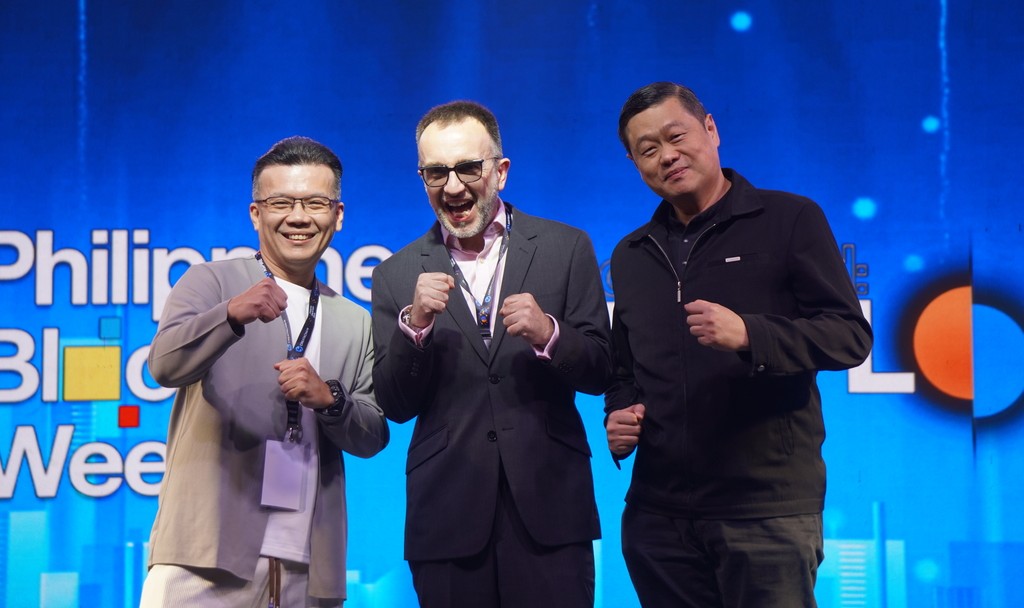
Scams and unchecked speculation continue to corrode digital assets. Blockchain leaders from Singapore, Malaysia, and the Philippines urged stronger oversight and deeper regional cooperation during the panel “One Chain, One Voice: Advancing the Blockchain Industry Together” at the fifth Philippine Blockchain Week, moderated by Donald Lim, Chairman of the Blockchain Council of the Philippines.
In the mid-2010s, small pilots were launched, but fast-forward to today, it has evolved into large-scale adoption across ASEAN. Indonesia, the Philippines, and Singapore are now spearheading the region’s regulatory frameworks and infrastructure initiatives.
This region’s trajectory mirrors a clear change: from experimentation to integration into public services, trade finance, and cross-border payments, among others.
Rene Bernard, Founder and Vice President of Malaysia’s ACCESS Blockchain Association, recalled the industry’s turbulent early years when “so many players [were] taking advantage of the chaos in the market.” His association sought to restore legitimacy by endorsing credible companies and working with regulators to combat fraud.
According to Alan Ang, Chairman of the Asia Blockchain Association, even elderly investors in Singapore are victims of scams, losing hundreds of thousands of dollars to fraudulent platforms. Bernard and Ang both agree that education and structured associations help safeguard communities.
Panelists also explored the tension brewing between blockchain’s decentralised ethos and the role of councils or associations. For one, Lim pondered on resistance from Web3 when Philippine Blockchain Week launched in 2022.
Meanwhile, Bernard described Malaysia’s model. It has a democratic voting within associations that ensures member consensus while still offering regulators a credible point of contact.
Across ASEAN, each jurisdiction treats blockchain differently, with varying degrees. But regulators are now advancing toward harmonised digital asset rules. For instance, countries such as Singapore, Thailand, Indonesia, Malaysia, and the Philippines have revised their frameworks this year to better balance innovation and investor protection.
Recently, the Philippines’ BSP prohibited the use of privacy coins. Lim explained that the country has become more flexible, with millions of users and a government willing to experiment. Malaysia does allow licenced exchanges but warns against unregistered overseas platforms, placing retail investors in a vulnerable position. By contrast, Singapore limits crypto trading to high-net-worth individuals, signalling a cautious and paternalistic stance.
According to the panelists, blockchain’s potential can expand beyond crypto. They described how governments and enterprises are utilising it across sectors such as finance, logistics, healthcare, and public services.
Additionally, Ang outlined Singapore’s projects, including food traceability and product transparency. Bernard also shared how the Malaysian government has backed Ringgit Coin (MYRC), which is implemented in local e-wallets. Lim introduced the Philippine Council’s “Integrity Chain” initiative to combat corruption, with possible applications in elections and land titling. Other notable projects include Vietnam’s NDAChain for e‑government.
Last March 2025, ASEAN startups raised $149 million across 16 rounds with a focus on infrastructure and enterprise use cases. These pilots include payment rails between Vietnam and Indonesia. There is also ADB’s blockchain trade guarantees between Thailand and Vietnam. Before the panel ended, Lim recommended that with Singapore set to chair ASEAN next year, a multilateral memorandum of understanding could boost blockchain integration across the region.
(Source: Singapore Government/YouTube)