
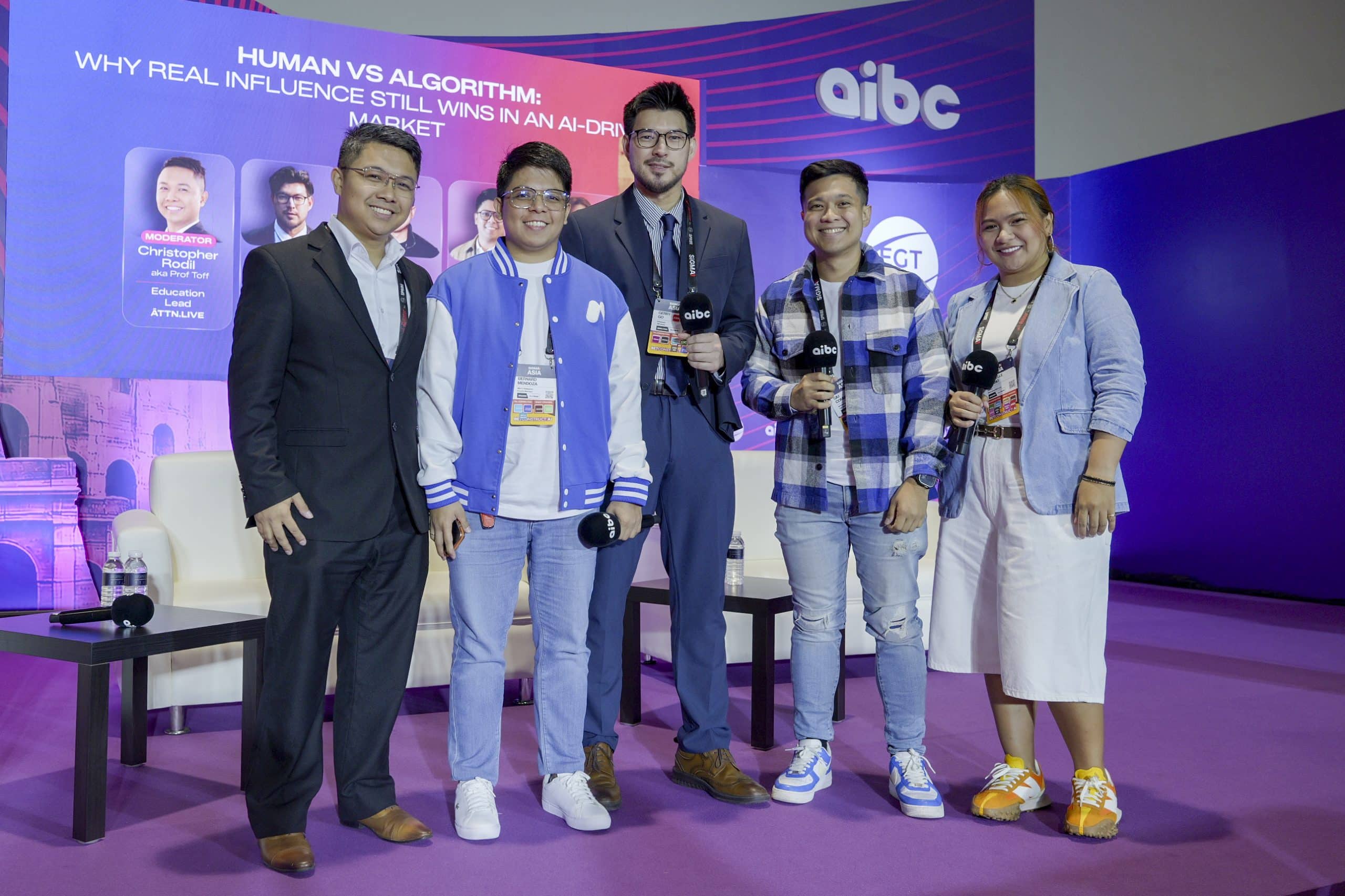
The second and final day of SiGMA Asia took place on 03 June. On the AIBC Stage, the conference hosted a panel titled “Human vs Algorithm: Why Real Influence Still Wins in an AI-Driven Market”. Speakers discussed what real influence means today, how to build trust in yourself and your brand, and whether chasing viral content is worth it. Below are the panel’s key takeaways.
The panel opened with a basic question: what counts as real influence? Speakers agreed that influence must be separated from views, likes, and viral spikes. Content can reach large numbers, enter recommendation feeds, and deliver short-term attention, but that does not automatically make its creator a genuine opinion leader. Real influence starts when the viewer does something after watching, changes their mind, makes a decision, joins a community, or returns to the creator again and again. In other words, changes behaviour.
“Real influence is when people take action because of your content”.
For brands, this matters even more. When AI makes it possible to produce more content in less time, volume ceases to be an advantage. The market is flooded with text, video, and images, yet audiences still seek a source they can trust.
One of the main lines of the discussion was the difference between reach and trust. AI can help with ideas, structure, productivity, and even surface-level persuasion, but trust does not come from perfect copy or a high follower count. It is built through reputation, experience, consistency, and relationships with an audience.
“AI can generate more views for you. You can fake all the followers, but you cannot fake trust”.
That is why creators matter, not because of numbers, but because of the quality of their connection to a specific audience. People trust a person, their story, their mistakes, and their position. A brand that works with a creator only for reach risks appearing to deliver results without real impact.
Speakers agreed that AI tools should support creators, not replace their voice. If content loses personality, audiences quickly sense something contrived.
“It still has to come with my own opinions, my own stories, my own experiences, and AI cannot fake that in any way”.
A separate part of the discussion focused on virality. Speakers did not dismiss its value. A spike in views can bring new audiences and boost awareness. But when a strategy is built only around viral content, substance inevitably becomes shallow. That kind of product attracts attention but does not keep people or help them understand what is being offered.
“If you’re always aiming for that viral video, it’s not going to be sustainable for the creator and also for the audience”.
Long-term brand building requires something else: consistency, usefulness, honesty, and transparency. For crypto, Web3, and fintech, this is especially important. The topics are complex, the market is sensitive to distrust, and audiences regularly arrive without a strong understanding of the product. A strong creator does not just pursue trends. They explain the complex in simple terms, return to the topic more than once, and demonstrate that real experience sits behind the content.
For companies, that means creator work should not be reduced to buying one-off reach. The more valuable model is a partnership in which the creator understands the product, speaks about it in their own language, and maintains audience trust. Virality can be an entry point, but it cannot replace a stable reputation.
In the final segment, speakers discussed communities. An algorithm can put content in front of millions, and AI can answer basic questions and help manage channels. But a community will not become loyal because of automation. People stay where they feel appreciated, have clear communication, and have an interpersonal connection.
“An algorithm can throw your content in front of millions of people and convert to views, but humans connect to humans”.
This is particularly relevant for Web3 and crypto projects, where community is part of the business model. Users come for information, but they also want to see who stands behind the brand, how changes are explained, and whether support exists during declines or trust crises.
Innovation does not wait, and neither should you! AIBC Eurasia, 15-17 March 2027, convenes 14,000 global decision-makers in Dubai and Ras Al Khaimah at the heart of MENA’s tech transformation.