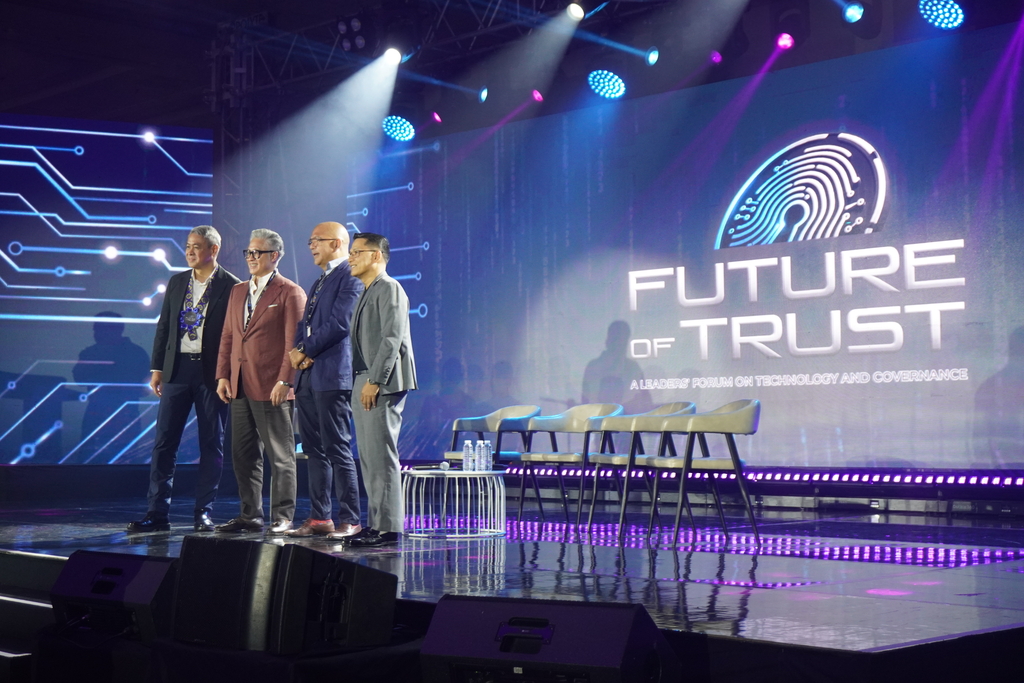
In a world where digital transformation is reshaping industries, trust has become the most valuable currency. At the fifth edition of the Philippine Blockchain Week, a panel titled “Enterprise Trust: Operationalising Governance, Security & Innovation,” which was moderated by management consultant Anthony Pangilinan, brought together leaders from banking, telecommunications, and retail to explore how organisations can embed trust in an era of rapid innovation and rising consumer expectations.
DITO’s Chief Revenue Officer, Atty. Adel Tamano, stressed that trust in telecommunications hinges on protecting the “entire digital life” of subscribers. With personal data, banking details, and e-commerce transactions now stored on mobile devices, telcos carry immense responsibility. He underscored the need for innovation, pointing out that outdated OTP systems must give way to advanced, network-based authentication. “The scammers are well-funded and intelligent. To protect subscribers, telcos must stay a step ahead,” Tamano said.
According to Dennis Omila, Chief Transformation Officer, UnionBank, trust is the new currency of banking. “We’re in the business of trust,” he declared, noting that while banks once safeguarded physical money, today they must protect digital transactions and customer data. Omila also stress that governance and security should be seen as enablers of innovation rather than obstacles. By incorporating auditors, compliance officers, and regulators into its digital transformation programmes, UnionBank ensures innovation remains anchored in reliability.
Victor Paterno, Chairman of Philippine Seven Corporation (7-Eleven Philippines), argued that trust begins at the ground level. With 4,500 stores nationwide, 7-Eleven acts as an “on-ramp of trust” for consumers hesitant about purely digital transactions.
He drew parallels between societies with high institutional trust and those reliant on personal networks, suggesting that trustless technologies could benefit countries like the Philippines. By offering face-to-face assurance, whether in loading wallets or resolving issues, retailers gradually build confidence, “step by step.”
When asked about the greatest threats, Paterno pointed to unreliable partnerships. Omila summed it up in one word: greed—when profit motives outweigh customer interests. Tamano highlighted the lack of openness in the market, especially for new entrants.
In a lightning round, panelists identified the biggest opportunities: For Omilia, it is their customer relevance, while Paterno highlights the Know Your Customer (KYC) practices. Meanwhile, Tamano stated that it is their continuous innovation.
Audience member Wesley Kronick raised a critical question: “How can the Philippines move from a paper-based trust system to digital trust?” Panelists agreed that policy reform and government digitisation are essential. Yet the private sector is already leading the way through convenience-driven innovations such as GCash, Maya, and digital KYC.
The discussion closed with Pangilinan’s reminder: “If your customers knew how you run your organisation internally, at the backend, today, will they trust your organisation?”
According to the panelists, trust is no longer a competitive advantage but the price of admission. Whether in banking, telecoms, or retail, organisations must embed authenticity, vigilance, and innovation into their operations to earn and sustain customer confidence.