AIBC Asia 2026 has come to a close, following 3 days of networking and hearing from industry experts. The event, which took place at the SMX Convention Centre in Manila, was attended by 7,800 people, all looking to discuss the latest in Web3 development.
Let’s take a look at the highlights from the event:
Autonomous agent to agent transactions could reach nearly USD 5 trillion annually by 2030. In just three short years, we have seen AI agents go from being knowledge tools to now fully autonomous actors and participants in the global economy.
Gary Liu, Co Founder and CEO at Terminal 3, discussed why the next phase of AI powered transactions will demand new security architecture, regulated digital assets and stronger identity systems.
The keynote set a serious tone for AIBC Asia 2026, placing security, privacy and governance at the centre of discussions around AI and digital assets.
AI agents are now a reality in gaming, finance, and Web3. During the panel, called Playing by New Rules: How Agentic AI Is Transforming Gaming, Digital Finance and Emerging Markets, panellists discussed how by February 2026, 20,000 AI agents were transacting on blockchain networks independently.
As AI agents begin to act independently, the panel quickly discussed questions about responsibility and control. Dr Thomason asked who should be blamed if a self-running system causes financial harm, especially in growing economies where rules are still being made. Panellists compared Agentic AI to junior staff. “No junior developer should be allowed to make senior level decisions,” Keith Zammit, from OneHazel said.
Prediction markets are emerging as one of the most popular topics in the emerging tech and Web3 industry at the minute, so it’s no wonder that AIBC Asia discussed them.
Discussions at AIBC Asia framed prediction markets as powerful but imperfect tools. “Insider trading concerns are real and not talked about enough,” Jared Dillinger, CEO of New Prontera Corp said.
Stepan Dobrovolskiy, CEO of BetBoom LATAM, compared prediction markets and traditional betting. “It’s 100% a betting product,” he said, adding that while sportsbooks operate under strict regulations, many decentralized platforms do not.Dobrovolskiy argued that regulation is not only inevitable but necessary. Existing betting infrastructure could serve as a model, helping address risks such as market manipulation and insider trading—both of which he identified as critical concerns. “There’s still a lot of manipulation of the market itself,” he warned.
The second day of AIBC Asia continued to discuss security in emerging tech developments.
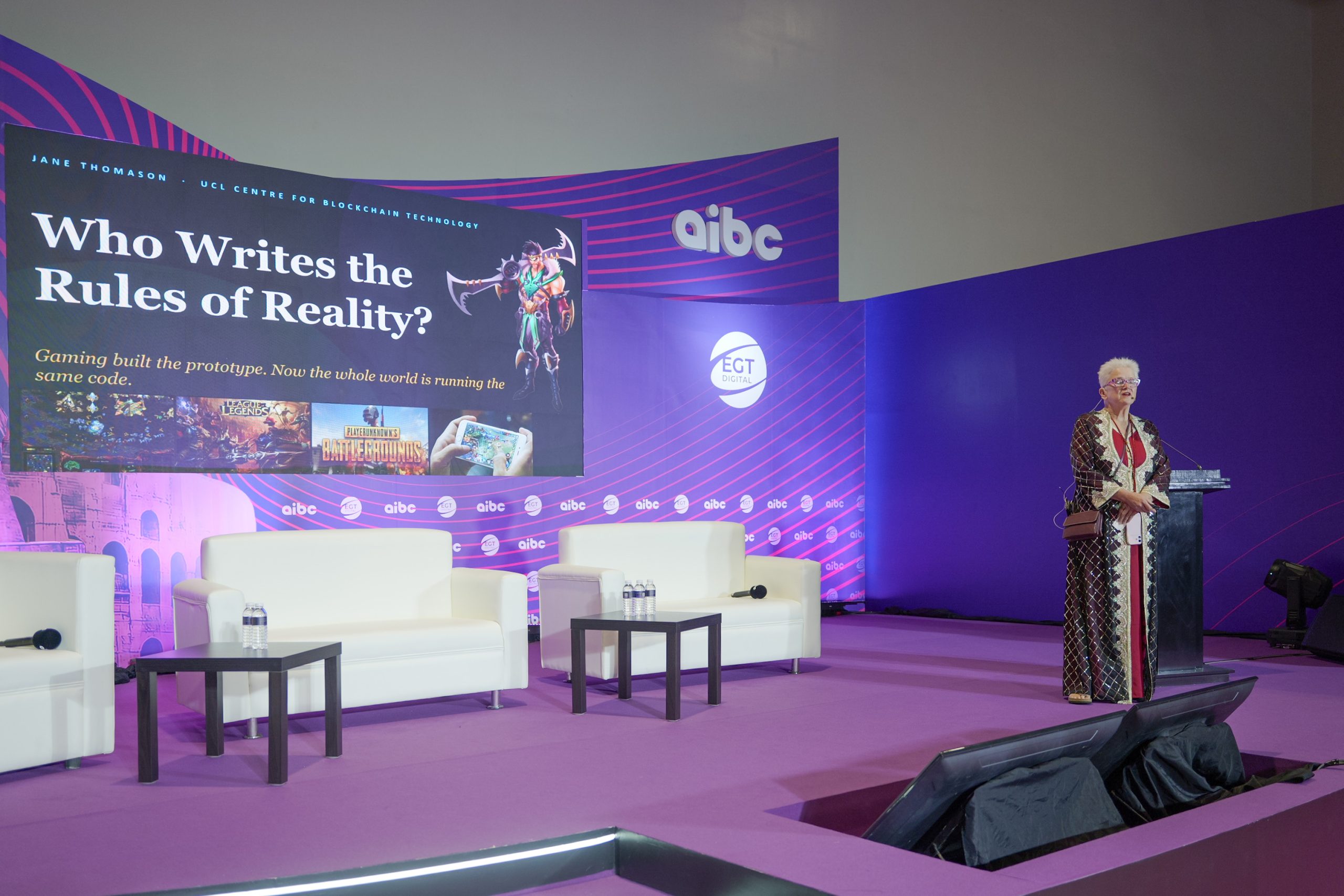
It also came with a stark warning, as Dr Jane Thomason, chair of the World Metaverse Council explained how a handful of technology firms, governments and standards bodies are quietly shaping the rules that govern digital life, with ethics lagging dangerously behind. “Whoever writes the code is the de facto lawmaker,” she warned.
She outlined five key governance challenges in Web3 systems: programmable money, where financial rules are embedded in code; the concentration of power among developers; privacy risks tied to codified digital identity; governance models dominated by token holders; and “function creep,” where data collected for one purpose is repurposed for surveillance at scale.
The panel opened with a basic question: what counts as real influence? Speakers agreed that influence must be separated from views, likes, and viral spikes.
For businesses, this means that relying on AI to generate views is a short-term approach. Real action from clients come through community-building, panellists insisted. “If you’re always aiming for that viral video, it’s not going to be sustainable for the creator and also for the audience,” panellists argued.
AIBC Asia 2026 ended with the AIBC Startup Pitch competition, where innovators across the emerging technology ecosystem, including crypto, blockchain, Web3, and artificial intelligence present their solutions to a curated audience of investors, accelerators, and industry leaders.
Each startup is given three minutes to present its concept, followed by a five-minute question-and-answer session with an expert judging panel, asking participants to defend and expand on their ideas in real time.
bond.credit secured first place with a proposition focused on real-time tracking of autonomous yield-generating agents.
Positioned as one of Europe’s largest gatherings for frontier technology, the next AIBC gathering will take place in Rome for AIBC World.
Participants and attendees can now secure passes for the Rome edition, where startups, investors, and global operators are expected to converge for what organisers describe as a landmark event in the 2026 tech calendar.