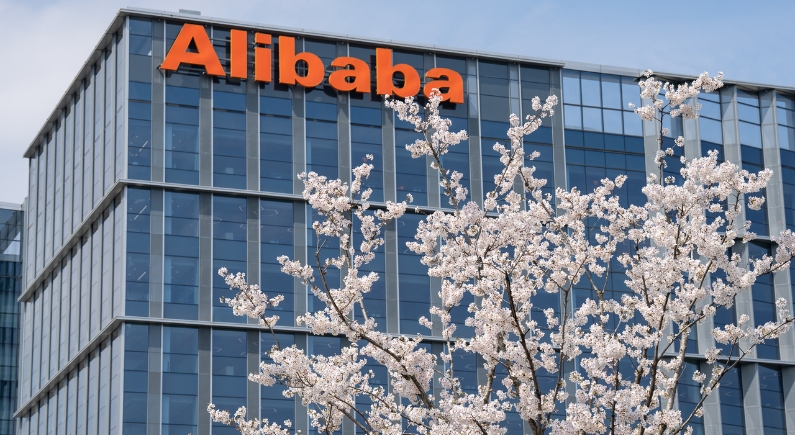
Alibaba launched an HK$80 billion (approx. $10.2 billion) share placement on 24 August 2026, at HK$112.70 (approx. $14.38) per share, an 8.4 per cent discount to its previous Hong Kong closing price. The company plans to use 100 per cent of the net proceeds from the Equity Placement to invest in its full-stack artificial intelligence (AI) capabilities, including expanding and enhancing its AI infrastructure.
Alibaba shares fell as much as 10 per cent during trading and were down about 9.1 per cent at HK$111.80 (approx. $14.27) in afternoon trade, according to Reuters.
The fundraising comes as Alibaba increases AI spending. Its latest quarterly net profit fell 75 per cent year over year, while capital expenditure rose sharply due to higher AI infrastructure investment.
Alibaba will raise HK$80 billion ($10.2 billion) in a discounted share sale to fund AI chips, infrastructure and model development. The shares were priced at an 8.4 per cent discount to Alibaba’s Friday closing price, raising concerns about dilution for existing shareholders and about whether the company can generate returns from the new capital.
The announcement followed Alibaba’s latest quarterly results, which showed a 75 per cent year-over-year decline in net profit, largely due to higher spending on AI infrastructure. Revenue rose 9 per cent in the April-June quarter, while cloud and AI-related services revenue increased 45 per cent to 48.44 billion yuan (approx. $7.2 billion). Capital expenditure jumped 75 per cent to 67.68 billion yuan (approx. $10.1 billion) as the company expanded its computing capacity, chip development and AI operations.
Reuters reported that the share sale attracted about $28 billion in orders, nearly three times the amount being raised. Around $6 billion came from long only and sovereign investors, while about 40 per cent of the order book was allocated to those institutions. Reported investors included the Qatar Investment Authority, Norway’s Norges, and Hillhouse.
The key question for investors is whether AI revenue can grow fast enough to offset the rising costs of building and operating AI infrastructure. That balance between revenue growth and investment spending is likely to remain a focus in the coming quarters.
Dilution is the first issue. Alibaba is decreasing the ownership stake of current investors by issuing new shares, unless the rewards from the additional capital offset this effect. In essence, the corporation is asking investors to have faith that future AI-related profits will make up for the dilution. Timing is the second issue. Only a few days after Alibaba revealed a 75 per cent drop in quarterly net profit, the shares were sold.
Competition is another factor. Alibaba faces heavy investment from Chinese rivals including Tencent, Baidu and ByteDance, as well as specialist AI firms. It is also competing in a broader global market where companies such as Microsoft, Amazon, Alphabet, Meta, and Oracle are investing heavily in AI.
The debate was reflected in comments from Yang Tingwu, vice general manager of Tongheng Investment, who told Reuters that Alibaba’s roots remain in e-commerce rather than advanced technology.
Tingwu stated, “Alibaba’s DNA is in e-commerce, not advanced tech. No matter how much it invests in AI hardware, it will likely be outmaneuvered by competitors in tech innovation.”
Chinese spending on AI has remained relatively restrained, partly because US export restrictions have limited access to Nvidia’s most advanced AI chips. As a result, Chinese technology companies have focused on developing more efficient AI models and infrastructure that require less computing power and lower capital investment.
Reflecting the growing importance of the sector, Alibaba recently separated its AI operations from its cloud division, with Chief Executive Officer Eddie Wu taking charge of the new unit.
Beyond positioning itself as a leading AI partner for businesses in China, Alibaba is preparing to list its chipmaking subsidiary, T-Head, in an initial public offering. The company is also developing AI agents designed to connect services across its ecosystem, including e-commerce, food delivery, travel and entertainment platforms.
During its earnings presentation last month, Alibaba CEO Eddie Wu said it had already committed nearly half of its three-year capital expenditure budget of 380 billion yuan ($56.5 billion). Wu said these projects are expected to break even within three years, or potentially within 2.5 years, as profit margins improve and Alibaba increasingly replaces third-party hardware with its own chips.
Qwen, Alibaba’s family language models, sits at the centre of the company’s AI strategy. Beyond chatbot apps, the platform offers a fundamental AI framework that underpins Alibaba’s operations and lets companies and developers create AI-powered services.
The technology has applications spanning customer service, software development, document processing and data analytics. Developers can build AI-powered products on top of Qwen, while Alibaba can integrate the models across its own ecosystem of services.
The Qwen model family is just one aspect of Alibaba’s AI goals. The corporation demonstrated the increasing significance of artificial intelligence to its long-term strategy earlier this year by placing its AI activities under a stand-alone structure headed by Chief Executive Eddie Wu.
Additionally, the company is creating AI agents that may link services throughout its ecosystem, such as travel, entertainment, food delivery, and e-commerce. Instead of visiting different programmes, the objective is to offer a unified experience where users can accomplish many tasks using a single AI interface.