
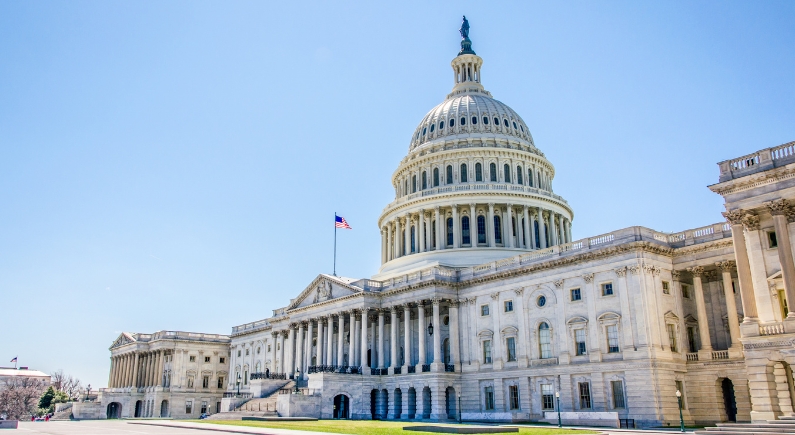
The US Securities and Exchange Commission (SEC) has proposed new rules, titled “Regulation Crypto Assets,” on 18 August 2026. The proposal aims to provide eligible crypto issuers with specific pathways for raising capital while maintaining investor protections.
The proposal distinguishes between crypto assets and investment contracts, allowing certain digital assets that are not securities to be treated separately from the investment contracts associated with their sale. SEC Chairman Paul S. Atkins said the framework is intended to provide greater regulatory clarity and support capital formation in the digital asset sector.
Regulation Crypto Assets is a proposed SEC framework for certain investment contracts involving crypto assets. The proposed rules include two exemptions from the Securities Act of 1933 registration requirements, specifically tailored to certain investment contracts involving crypto assets. The first is a one-time exemption that would permit offerings of up to $5 million during a four-year period. The second exemption would permit offerings of up to $75 million in each 12-month period.
Under both exemptions, issuers would be required to make certain principles-based narrative disclosures available to their investors. In addition, issuers under the second exemption would be required to provide financial statements and be subject to ongoing reporting requirements.
The SEC’s approach is more focused on how investment contracts work and do not insist on classifying all crypto assets as securities. The proposal expands on the agency’s March 2026 view on federal securities law and some transactions with crypto assets.
Chairman Atkins added, “The proposal could change how crypto startups approach compliance. Rather than requiring developers to fit new technology into existing regulatory frameworks without adjustment, it would establish a defined compliance pathway. Crypto companies would still be subject to securities laws, but some qualifying projects could have an alternative route to meeting regulatory requirements.”
With our new proposal, the SEC is taking the most historic step yet to modernize federal securities regulations for crypto assets.
As the Crypto Capital of the World, the U.S. must and will lead. Regulation Crypto Assets will ensure that we do. 🇺🇸 pic.twitter.com/z0MmDF4doV
— Paul Atkins (@SECPaulSAtkins) August 18, 2026
The new startup exemption being put forward will enable eligible issuers to raise up to $5 million over a span of four years. The idea is similar to one that Chairman Atkins mentioned earlier in March 2026: a four-year regulatory system for crypto developers who have a fundraising limit of $5 million.
The purpose of the proposal is to support new projects that have a need for money to build their networks. Raising funds usually means that many securities laws would come into play, and these laws can be complex and costly, especially for smaller teams. The exemption allows eligible projects to raise their funds while giving the investors different disclosures based on the features of their projects.
The newly proposed exception will also make it possible for eligible companies to raise capital of up to $75 million in 12 months. However, it will introduce more rigorous requirements for disclosures in comparison to other classes of exemptions and will involve the need for financial statements to be issued and ongoing disclosures. The SEC stressed the need for audited financial statements to be issued every time a certain threshold of fundraising is passed.
The framework gives a chance to combine the roles of both fundraising and fully registered Initial Public Offering (IPO) process since those looking for millions will encounter higher demands for transparency than smaller businesses searching for smaller sums. Meanwhile, it does not oblige young blockchain owners to comply with each and every requirement for public companies from the very beginning.
Under the framework, disclosure requirements increase alongside the amount of capital raised, while the regulatory pathway remains tailored to crypto assets.
Several parts of the US government are concurrently shaping rules on cryptocurrencies. The Securities Exchange Commission is concentrating on securities settlements and investment contracts. On the other hand, Congress is interested in the bigger picture of the financial structure, since it passed a landmark bill, CLARITY Act related to digital assets. Meanwhile, the Senate is analysing its aspects including offering rewards from exchanges and yield schemes.
Recently, The US Department of the Treasury has issued a Notice of Proposed Rulemaking (NPRM) and opened a 60-day public comment period on its implementation of Section 3 of the Guiding and Establishing National Innovation for US Stablecoins (GENIUS) Act.
The GENIUS Act is scheduled to take effect on 18 January 2027. Under the law, payment stablecoin issuers will generally be required to obtain a federal or state licence to operate in the United States.
The proposed regulations also outline conditions for stablecoins created internationally. Under the new idea, operators of US digital services will be limited in activities involving foreign stablecoins. The Treasury will take into account consumer opinion before approving the proposal. As a result, the framework required for the American digital industry begins to take form.