Blockchain is a fast-moving world where technology alone no longer guarantees its survival. Industry leaders declared that trust has become the most valuable asset in blockchain communities, eclipsing even technology and capital at the fifth edition of the Philippine Blockchain Week.
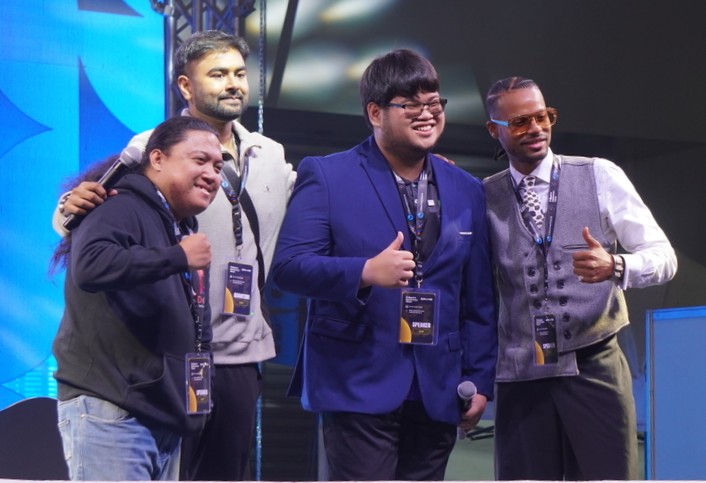
The panel, moderated by Noe Jose of Celestial Council, featured Jay Shah, Founder of Alpha Tree; Joseph Suarez Lejarde, Founder and CEO of WhizKid Academy; and Eliezer Rabadon, CEO of DvCode Technologies Inc.
The foundations of blockchains trace back to Ralph Merkle’s 1979 patent, Merkle trees, a data structure that enabled secure verification of large datasets. Fast forward to 2008, blockchain was introduced by Satoshi Nakamoto in a paper in which he described it as a way to engineer trust through mathematics and consensus instead of depending on governments or banks, according to Coin Law.
Panelists pointed out that communities are the focal point of blockchain adoption. However, they cautioned that authenticity is increasingly difficult to evaluate. “A genuine community is one aligned in culture and purpose,” Rabadon said. Meanwhile, Shah stressed the motto: “Don’t trust, verify.” The discussion highlighted how smart contracts and transparency tools can help filter out bad actors and reinforce trust.
Panelists also explored whether having strong technology can succeed without a strong community. Shah declared that “the power of the community beats everything,” citing projects with robust products but weak user bases. Additionally, Lejarde compared communities to armies, capable of absorbing shocks when technology fails. But for Rabadon, he warned that useless technology cannot survive no matter how strong a community is.
When asked whether they would cut marketing or community budgets, Shah favoured marketing to attract global audiences instead, whereas Rabadon insisted on preserving community investment. Lejarde emphasised that strong leadership is the key to organic growth, noting that “trust is the biggest commodity of all.”
The role of artificial intelligence has turned into a double-edged sword. Shah described AI’s role as automating social media engagement. Meanwhile, Rabadon warned against false assurances. Lejarde also highlighted that human interaction remains irreplaceable, cautioning that communities risk losing their emotional core if over‑automated.
Shah referred to the case of Joby Weeks, an early Bitcoin evangelist, who has faced legal battles against the U.S. government. With the aid of “Free Joby” coins, they have been able to fund his legal battles. His case illustrates how communities can rally around individuals and causes. Rabadon shared how his team built a game project organically through community support, while Shah highlighted validator networks as a new form of community safeguarding blockchain transactions.
According to the panelists, blockchain communities are more than support systems’ trust, culture, and resilience are part of the ecosystems. The future of crypto will also be shaped not just by technology but also by the strength and authenticity of the communities behind it.
Before departing, panelists shared practical advice for founders, investors, and guests alike. This includes always verifying before trusting, conducting due diligence on teams and founders, and engaging only through verified channels. Blockchain communities are more than support systems. They are movements, networks, and ecosystems that can determine whether projects succeed or fail, according to Jose.
(Source: TEDx Talks/YouTube)