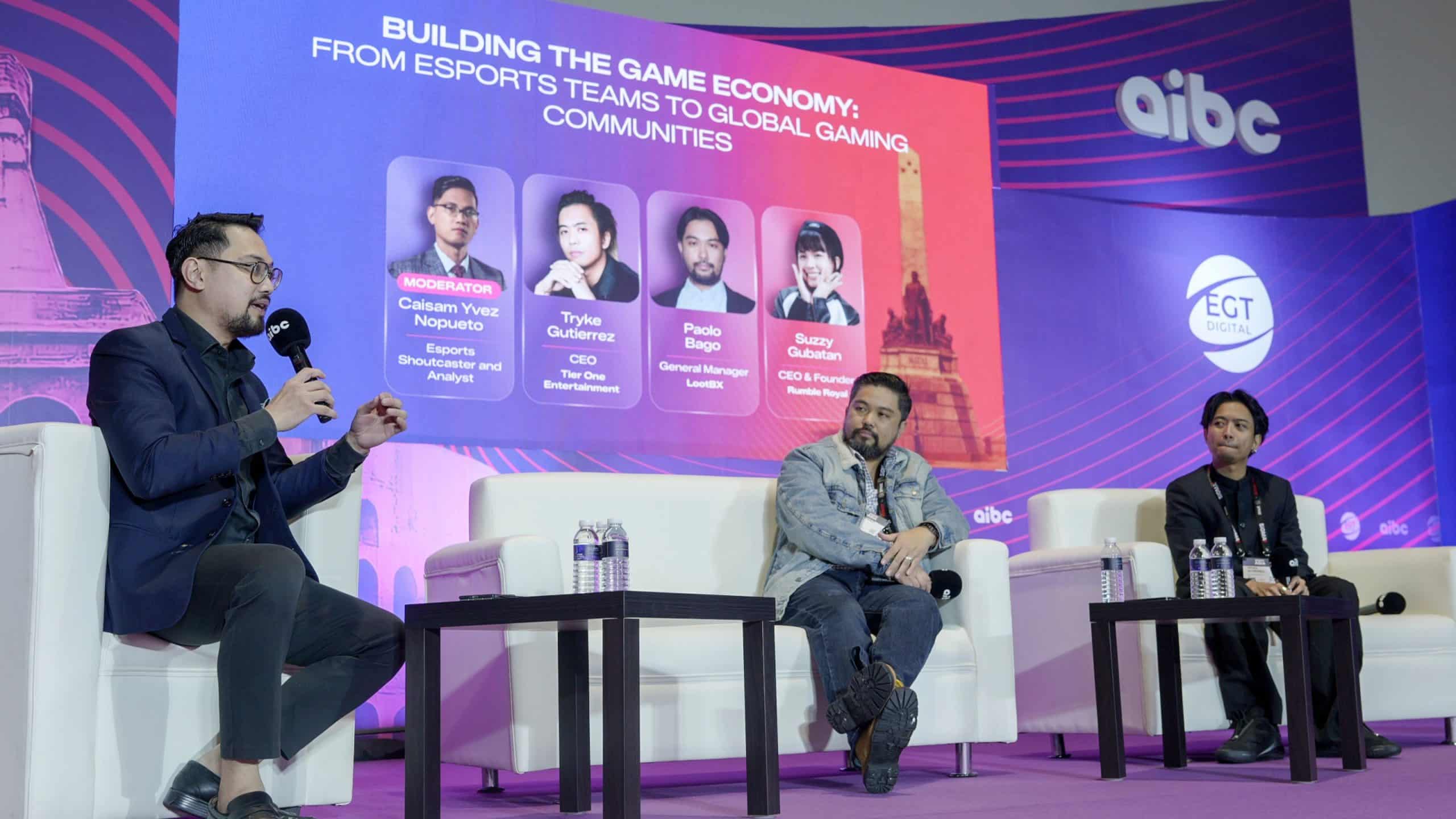
AIBC Asia 2026 continued its second day of conference at the SMX Convention Center in Manila with a focused discussion on the business of esports, creator-led growth, and the communities shaping gaming economies across Southeast Asia.
The panel, titled “Building the Game Economy: From Esports Teams to Global Gaming Communities”, brought together Tryke Gutierrez, CEO of Tier One Entertainment and co-owner of Blacklist International, Paolo Bago, General Manager of LootBX and former national coach of the Filipino Dota 2 team, and Caisam Yvez Nopueto, known in the esports scene as Wolf, an esports shoutcaster and analyst.
The panel opened with Gutierrez outlining the scale of Tier One Entertainment, which represents 1,300 creators across Southeast Asia, while also operating Blacklist International. He noted that the organisation is currently competing in Honor of Kings and is the first and only Southeast Asian organisation included in the Esports World Cup roster of 30 teams.

Bago placed the growth of esports in the Philippines within the country’s café culture, where gaming first became a shared activity across universities and local communities. “Computer cafés were able to bring gaming into universities and communities across the Philippines. It democratised gaming for a lot of us,” he said.
The panel pointed to mobile gaming as the major force behind the region’s esports expansion. Bago explained that the economics of mobile esports are very different from PC titles, with mobile devices lowering the cost of entry for teams, players, and communities. He noted that a mobile team may only need around $5,000 worth of devices, compared with around $50,000 worth of equipment for a PC-based Dota 2 team.
Gutierrez added that esports has changed from a less structured market into one where publishers now take a far more active role. “Back then, organisers could build a team, put up capital, launch a product, and operate with very little interaction from publishers. Today, publishers want direct control over their intellectual property, branding, and partnerships,” he said.
For companies attending AIBC and SiGMA, the speakers framed esports and creator management as a route to engaged audiences. Bago said gaming firms often view esports teams, creators, broadcasts, and leagues as channels for traffic generation, with value coming from understanding where communities gather and how that engagement can translate into users and revenue.
The conversation also looked at esports as entertainment culture. Gutierrez said public perception has improved, but esports has not yet fully become pop culture. He argued that the industry still needs more relatable storytelling, including realistic portrayals of team operations, player contracts, bootcamps, and the personal pressures behind performance.
Nopueto pointed to accessibility and connection as the main reasons mobile gaming grew so strongly in the Philippines and Southeast Asia. “I believe mobile gaming became successful not because of the games themselves, but because of the communities around them,” he said.
The panel closed with optimism about the future of esports. Rather than chasing only the next major title, Gutierrez suggested the industry should build more ways for audiences to enjoy the games and communities that already exist.
AIBC Asia 2026 continues to bring together leaders from gaming, emerging technology, digital marketing, and investment in Manila. Readers and industry professionals can also look ahead to AIBC’s flagship summit in Rome, where the global conversation will continue with new opportunities for networking, deal-making, and cross-border growth.