
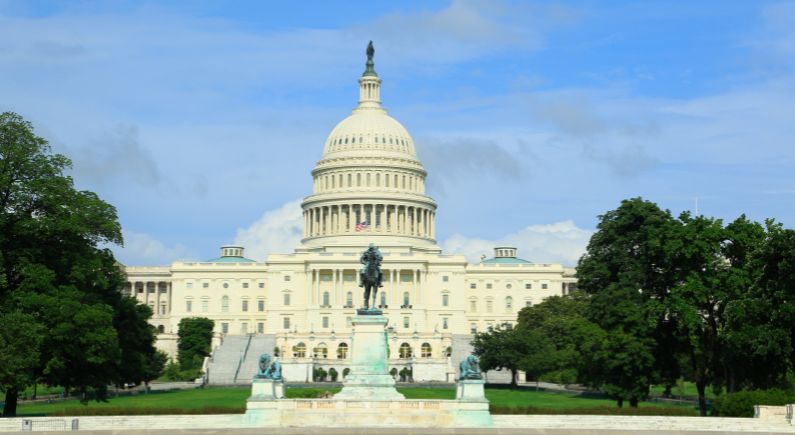
The US Senate Banking Committee has advanced the Digital Asset Market Clarity Act, known as the Clarity Act, with a bipartisan 15-9 vote, marking a major step towards establishing clearer cryptocurrency regulations in the United States.
The proposal seeks to establish whether cryptocurrencies are covered by commodities or securities regulations, as well as to outline how digital assets are regulated. The goal of the measure is to reduce long-standing regulatory uncertainty affecting banks, investors, decentralised finance (DeFi) platforms, and cryptocurrency exchanges.
Supporters of the measure claim it will strengthen the US position in financial technology innovation and provide the digital asset industry with clearer regulations. However, critics argue the law may weaken anti-money laundering oversight, leave regulatory gaps for DeFi platforms, and raise ethical concerns about political involvement in cryptocurrency companies. The bill still needs to pass through additional debate and approval stages before it can become law, but the committee decision has given it renewed momentum.
The Digital Asset Market Clarity Act is a major attempt to bring order to US crypto regulation. For years, confusion has persisted over whether tokens should be treated as securities or commodities, leaving exchanges, developers, and investors caught between conflicting agencies. The bill seeks to divide responsibilities between the SEC and CFTC, providing clearer rules on which assets fall under stricter securities oversight, and which are treated more like commodities.
On top of that, the legislation also addresses investor protections, decentralised finance, stablecoins, and anti-money laundering requirements, making it one of the most wide-ranging crypto bills Washington has ever seriously considered. It is also notably one of the first genuine attempts to write laws designed from the ground up with blockchain in mind, rather than adapting old financial rules to fit a new technology. Supporters believe it delivers the certainty the industry has needed for a long time, while critics worry it could weaken oversight and open the door to new risks.
The Clarity Act, which offers stability after years of uncertainty, has been strongly supported by the cryptocurrency industry. Regulators have sent businesses mixed signals; some have treated tokens as commodities, while others have treated them as securities. Clear regulations would give businesses confidence to operate in the United States, while also encouraging institutional investment and reducing the ongoing cycle of lawsuits and enforcement actions.
Industry leaders have been direct about what they believe is at stake if Congress fails to act. They warn that the United States risks falling behind other countries that have already established functioning regulatory frameworks for digital assets, making those places more attractive for crypto businesses and talent. The bill gained real momentum after clearing a bipartisan committee vote, and markets responded with noticeable optimism. Many in the industry interpreted that vote as a sign that crypto regulation might finally be moving beyond endless debate and towards something that could actually become law.
The Senate Banking Committee’s vote on the Clarity Act nearly collapsed due to disagreements over anti-money laundering guidelines, ethical regulations, and amendments. Senator Elizabeth Warren led the criticism, warning that the bill failed to adequately address the risks associated with cryptocurrency. Republicans accused opponents of obstructing innovation, while Democrats objected to procedures. Tensions were high.
A compromise eventually emerged when Chairman Tim Scott accepted changes that added investor protections, clarified banking rules, and refined definitions for decentralised finance.
Today, Chairman @SenatorTimScott led Banking Committee Republicans and Democrats in a historic bipartisan markup to advance to Clarity Act, legislation that will establish clear rules of the road for digital assets. pic.twitter.com/FujDX2GnAd
— U.S. Senate Banking Committee GOP (@BankingGOP) May 14, 2026
Congress still has a long way to go before passing the Clarity Act. Once it passes the committee, it must move through Senate negotiations, align with an Agriculture Committee version, gain approval from the full Senate, and then pass the House before being presented to the president. The limited time before the midterm elections and recess makes passing financial legislation even more complicated.
Bipartisan cooperation is crucial in the Senate, giving Democrats influence over the bill’s future. The final legislation may differ significantly from the current draft due to intense lobbying by banking and cryptocurrency organisations. Nevertheless, the bipartisan committee vote created momentum, which often shifts opposition away from trying to completely block the law and towards changing its details.