- Roadshow to Rome
- Exhibitors
- Agenda
- Speakers
- Media Partners
- News

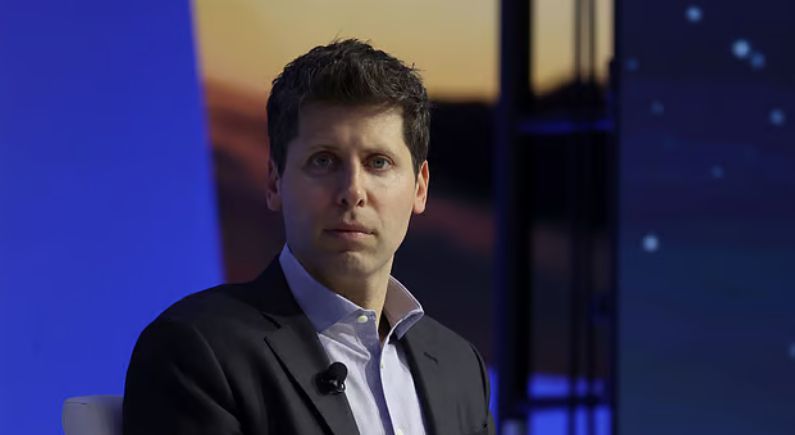
OpenAI CEO Sam Altman has positioned India at the centre of the global artificial intelligence (AI) landscape, stating that the country is not only adopting AI at scale but actively shaping its future. Speaking at the AI Impact Summit, Altman revealed that more than 100 million people in India use ChatGPT every week, with students making up over a third of that user base.
He described India as the fastest-growing market for Codex, OpenAI’s coding agent, and said the country is well placed to lead the world in AI development and deployment.
Altman said India’s scale and democratic framework create strong conditions for AI growth. He noted that the country is not only building AI tools but also influencing how they are used.
“More than 100 million people in India use ChatGPT every week,” he said, highlighting the speed at which AI tools are spreading across sectors. He added that students represent more than one-third of Indian users, pointing to growing use in education and skill development.
India is also emerging as a major market for Codex, OpenAI’s AI coding agent. According to Altman, it is currently the fastest-growing region for the product. This trend reflects increasing adoption of AI tools by developers and technology professionals.
Altman addressed concerns about the high cost of AI infrastructure, which can limit participation by startups and smaller companies. He said the cost of OpenAI’s models has fallen by more than 1,000 times over the past 14 months.
He added that costs are expected to continue declining sharply, making AI more accessible for countries in the Global South. Lower operational costs could improve return on investment for businesses that rely on AI-driven solutions.
High computing and infrastructure costs have previously slowed adoption in developing markets. Falling prices may help widen participation and encourage innovation.
Altman said recent advances in AI models have made them powerful enough to contribute to new discoveries. He referenced a recent physics result that surprised many researchers, suggesting that AI systems are beginning to assist in generating new knowledge.
He also stated that early versions of super-intelligent systems could emerge within a few years. If that timeline holds, he said that by the end of 2028 more of the world’s intellectual capacity could exist inside data centres than outside them.
Altman acknowledged that this projection may not materialise but said the possibility requires serious consideration. He noted that advanced AI systems could potentially perform executive leadership roles or conduct scientific research at levels comparable to leading experts.
Despite the progress, Altman warned about the risks linked to increasingly capable AI systems. He highlighted the potential misuse of open-source biological models, which could be used to create harmful pathogens.
He also addressed concerns about the concentration of AI power among a few companies or countries. Altman said that concentrating AI control in one place, even in the name of safety, could have negative consequences.
He argued that democratised access remains the most viable path forward. According to him, putting AI tools in the hands of more people, even with certain risks, is preferable to restricting access to a limited group.
When asked about compensation for traditional and digital media organisations, Altman referred to the US fair use principle. He said OpenAI’s approach when displaying quotes from news articles or opinion pieces is to explore new business models with creators for training purposes.
Altman’s remarks come at a time when global debates around AI governance, safety and intellectual property continue to intensify. His comments underscore India’s growing influence in the global AI ecosystem and the accelerating pace of technological change.
Innovation does not wait, and neither should you — AIBC Eurasia, 8–11 February 2027, convenes 14,000 global decision-makers in Dubai and Ras Al Khaimah at the heart of MENA’s tech transformation.