
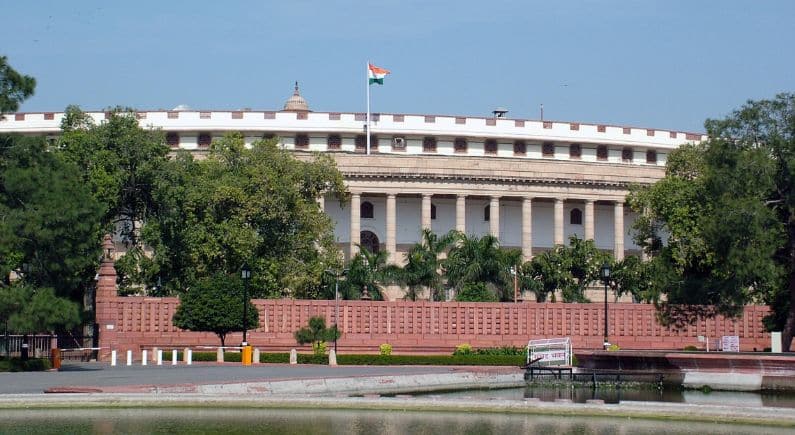
The Indian government has classified the Virtual Digital Asset (VDA) sector as “high risk” in a presentation to the Parliamentary Standing Committee on Finance, citing concerns about money laundering, cyber fraud, human trafficking, drug networks, and radicalisation.
Another issue that officials were quick to bring up was tax compliance in the cryptocurrency industry. Only about 139,000 of the 645,000 cryptocurrency dealers who had TDS applied to their transactions disclosed their cryptocurrency revenue, according to government data from FY23. Authorities view such figures as a window into larger concerns about transparency, offshore activities, and the efficiency with which the industry is monitored and regulated, rather than just a tax issue.
The Parliamentary Standing Committee on Finance in India, led by BJP MP Bhartruhari Mahtab, had in-depth conversations with representatives from significant cryptocurrency exchanges like Binance, WazirX, and ZebPay as well as government authorities as reported by the The Economic Times. The meeting marked one of the most structured engagements between lawmakers and the industry, involving multiple departments, including Finance, Corporate Affairs, CBDT, and IFSCA.
Crypto exchanges have been protesting India’s harsh tax system by requesting more flexibility and clearer regulations. With a flat 30 per cent tax on earnings plus a 1 per cent TDS on each transaction, the existing arrangement is harsh and gives traders little leeway. However, officials have not shown much empathy. They cited previous Enforcement Directorate seizures of cryptocurrency assets as proof that their worries are legitimate and that regulators have little reason to relax their hold anytime soon due to possible connections to money laundering and online gambling.
The designation of the virtual digital asset ecosystem as “high risk” by India is not merely a bureaucratic term; it has actual ramifications. According to ET, this designation leads to more stringent enforcement, more intensive oversight, and stricter requirements for compliance across financial systems. Officials also did not take this stance lightly. Regulators had sufficient justification to take a strong stand when intelligence assessments linked cryptocurrency activities to computer fraud, money laundering, drug trafficking, human trafficking, and suspicious high-value transactions.
A big part of the concern comes down to how crypto works by design. Because it is decentralised and borderless, tracing where money comes from and where it goes is far harder than in traditional banking, which has built-in reporting and oversight mechanisms. Add to that the significant volume of underreported or unregistered transactions that authorities have flagged, and the worry starts to extend beyond crime into straightforward tax compliance as well.
Authorities in India are finding it difficult to comply with cryptocurrency tax laws. Only 139,000 of the approximately 645,000 individuals who sought Tax Deducted at Source on their cryptocurrency transactions in FY23 actually submitted their crypto income. That disparity is too great to be disregarded. Although the goal of the 1 per cent TDS was to increase the transparency and traceability of cryptocurrency activities, the figures show otherwise. It was evident that a sizeable portion of investors were content to have taxes withheld on one end while quietly omitting the section in which they disclosed their true profits. That discrepancy is precisely the type of signal that regulators find difficult to ignore.
This issue is caused by a number of factors, including unclear regulations, the high 30 per cent tax rate without loss offsets, migration to offshore platforms, casual traders’ ignorance, and their fear of being scrutinised. Industry speakers contend that the strict tax structure itself is the primary cause of non-compliance because it discourages reporting and drives customers away from Indian exchanges by charging gains without recognising losses.
Capital flight through offshore exchanges is one of the main issues India has with cryptocurrency. Lawmakers pointed out that a lot of investors favour international platforms because of high local taxes and ambiguous rules, which make it harder to enforce after activity leaves India’s borders. Concerns regarding tax leakage, diminished visibility into questionable transactions, and lax monitoring have been raised by the fact that nations like Singapore have developed as hubs for companies catering to Indian consumers.
Before deciding on a course for its own regulation of cryptocurrencies, India is carefully studying international approaches. Three basic patterns were identified by lawmakers: governance through existing laws, as in Brazil and Japan; tight bans, like China’s near-total prohibition; and organised regulation, such as in the United States, United Kingdom, and European Union.
India is still undecided, weighing the risks of financial crime, capital flight, and misuse against the technology’s economic promise. Its current position is more akin to a cautious middle ground, indicating selective enforcement and observation rather than a firm commitment.