- Roadshow to Rome
- Awards
- Agenda
- Exhibitors
- Speakers
- Media Partners
- News

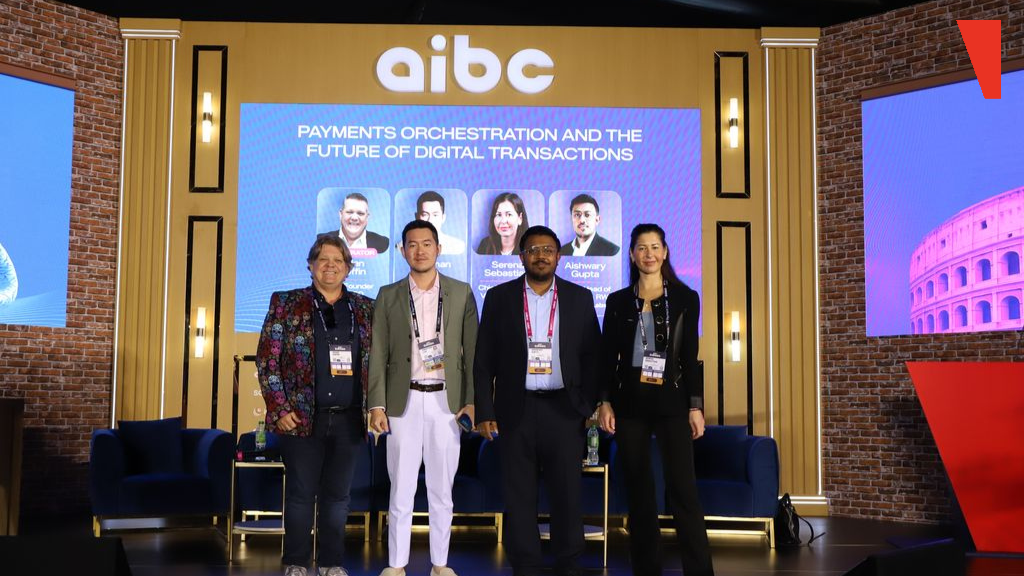
On 10 February 2026, the AIBC Eurasia Summit in Dubai hosted a panel of industry leaders to examine one of the most pivotal shifts in digital finance. The session, titled “Payments orchestration and the future of digital transactions”, explored how increasingly complex payment ecosystems are being unified through orchestration layers designed to enhance efficiency, resilience, and global scalability.
Julian Goffin, who is one of the co-founders and currently serves as the CEO of Alunafi, highlighted how companies juggling several payment service providers will encounter operational issues. With increasing transaction volumes and user expectations, more and more businesses will turn to orchestration platforms to reduce the complexity that they deal with on the back-end. Orchestration allows businesses to focus on growing their business by helping them to route their transactions intelligently, optimise their approval rates, and stay up and running during provider outages.
Jonathan Low, the founder and current CEO of Biptap, noted that payment performance is inextricably linked to user experience. When customers expect their transactions to be processed quickly and reliably every time they use a payment method, it will erode their trust if their payment method fails or there is a delay with their transaction. Orchestration allows merchants to use dynamic payment rails based on geography, cost, and speed without exposing the end-user to the technical complexity associated with those processes. Jonathan also pointed out that orchestration helps merchants deal with the uncertainty of rapidly evolving regulations, which allows for businesses to expand into new jurisdictions without worrying about being interrupted by changes to local regulations.
Aishwary Gupta, Global Head of Payments and RWAs at Polygon Labs, discussed the intersection of traditional finance and blockchain infrastructure. Orchestration now allows companies to combine fiat and crypto rails seamlessly, enabling programmable payments and faster settlement processes. By leveraging blockchain, businesses can reduce dependence on pre-funded accounts and correspondent banking, ensuring faster, more reliable movement of funds globally. Gupta noted that even for institutions handling billions daily, orchestration provides alternative pathways for liquidity and transaction continuity.
Serena Sebastiani, Chief Strategy and Venture Officer at Fuze, added that orchestration is increasingly essential for integrating emerging digital assets, stablecoins, and tokenised assets into existing payment flows. For end users, this integration is seamless: whether paying in fiat, crypto, or stablecoins, the experience is consistent while the complex backend orchestration handles regulatory compliance, liquidity, and cross-border settlement.
The panel also pointed out how important orchestration is in advancing financial inclusion around the globe. In countries with limited card usage and where cashless solutions are gaining market share, orchestration gives companies the ability to provide the same customer experience across numerous rails (eg, direct debit, ACH) and currencies (eg, USD, GBP, etc.) through one API integration. By providing this level of flexibility to their clients, orchestration also reduces friction for the consumer as it speeds up the ability to enter new markets and provides businesses with a way to develop their businesses across multiple jurisdictions with different regulatory requirements.
Thus, orchestration has developed from a back-end solution used for optimising business operations to an integral component of a company’s overall digital strategy. Companies can be nimble and able to respond to regulatory shifts while providing their customers with a seamless experience in an environment where financial transactions are becoming increasingly more complicated through the connection of different payment types with intelligent infrastructure.
As operators, fintechs and platforms navigate the ever-evolving digital transaction landscape, the AIBC Eurasia Stage’s recommendations made it clear: The future of digital transaction processing will not be defined by payment types, but rather by the intelligence that binds them together.
To obtain further insight about the AIBC Eurasia, as well as future discussions regarding the digital economy, please visit SiGMA’s website.