Women must stop waiting to be invited into AI, says entrepreneur
Written by News Team
Fri, 05 Jun 2026
Artificial intelligence is moving from specialist labs into ordinary workplaces at a speed few industries can ignore. For women, the shift presents both an opening and a risk: new tools may lower barriers to entry, but the technology sector remains dominated by men, and the benefits of the AI boom are not guaranteed to be shared evenly.
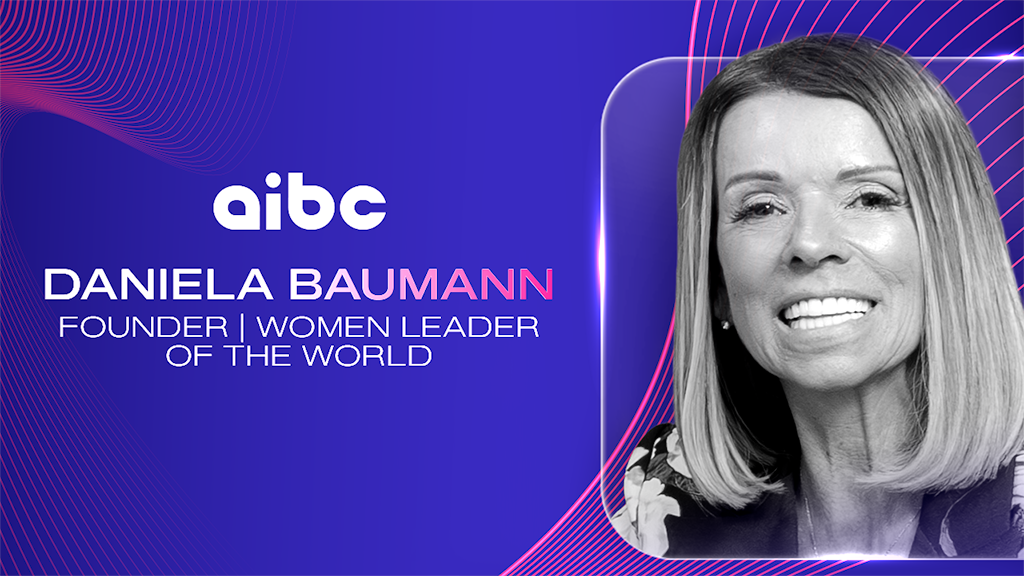
That tension is at the centre of Daniela Baumann’s message. The founder of Women Leader of the World argues that women should not wait to be invited into technology, nor assume that AI, blockchain or digital tools belong to someone else.
Baumann remembers the resistance she met in 2019, when she first tried to move her own fitness business away from paper and towards an app. She was running studios with about 75 women on staff. The shift was modest: replacing manual attendance and admin with software. Yet for many of the women, especially older staff, the change felt intimidating.
“I told them: ladies, it is so easy,” Baumann said. “You open the app, and when the students come into class, you just press that she is here. For us as entrepreneurs, it made life so much easier.”
Her point, made on the sidelines of AIBC Eurasia in Dubai, was not about fitness administration. It was about artificial intelligence, blockchain and the wider technology economy. For Baumann, the first obstacle is often not only access to technology, but fear of it.
“When there is change in the world, like AI or ChatGPT, we should not say, ‘Oh no, it is too complicated,’” she argued.
The confidence gap
Baumann’s argument begins with confidence. Asked what holds women back from leadership roles, she did not start with corporate policy or funding. She began with self-belief.
“Women limit themselves,” she said. “They do not believe in themselves. They think they are not educated enough. Men do not think like this. A man goes in and says, ‘I can do it, no problem.’ A woman often thinks she is not enough for the job. But she is.”
For Baumann, that pattern starts early. “It begins in childhood,” she said. “Girls are told to be quiet, not to show emotion, not to cry. Many women grow up putting everything inside.”
Her answer is visibility. She says women need to see others who have faced similar barriers and survived them. On stage, she often tells the story of building her fitness business from scratch, as a single mother of two, while carrying 30,000 in debt.
“After my speech, women come to me and their hands are shaking,” she said. “They tell me, ‘You gave me so much peace, and I am starting to believe in myself.’ Women need role models who tell the truth.”
Technology’s uneven rewards
Stanford University’s 2025 AI Index says AI use in business is accelerating rapidly, with “78% of organisations reported using AI in 2024, up from 55% the year before”. It also says research increasingly shows AI “helps narrow skill gaps across the workforce”.
That could matter for workers trying to move into more technical roles. But there is a warning in the data too. The World Economic Forum’s Gender Parity in the Intelligent Age paper says women are more likely to be in jobs disrupted by generative AI and less likely to be in roles augmented by it. It also finds that women’s participation in tech rose from 26.1% in 2016 to 28.2% in 2024, still less than one-third of the STEM workforce.
There are brighter signs. The same paper says “female AI talent on the platform has expanded significantly between 2018 and 2025” and that “the gender gap in AI talent has narrowed in 74 of 75 economies”. The opportunity is real, but it will not distribute itself fairly.
Baumann believes the solution is education followed by access. “We need to educate women first, show them exactly what this is, and then bring them to these events,” she said. “Sometimes they think, ‘I cannot do it,’ because in childhood they heard, ‘This is not for you.’ But it is for everyone.”
She is now planning a women-focused event in Dubai, where she has lived for the past four years after three decades in Switzerland. Dubai, she said, gives her a base from which to “spread the world” and show women what is possible.
“Everything in life is possible,” Baumann concluded. “The only thing is that you have to believe in yourself. Never, ever give up. And when you become successful, take another woman with you.”