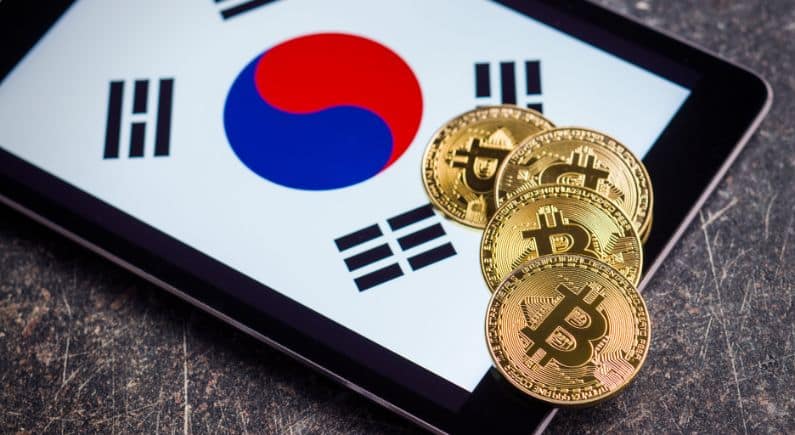
South Korea has introduced new guidelines allowing listed companies and professional investors to trade cryptocurrencies. Several media outlets reported that the government’s 2026 Economic Growth Strategy, which includes stablecoin laws and licencing for spot cryptocurrency ETFs, is in line with this action. It lifts a nine‑year restriction that had left the market dominated by retail investors.
In 2017, South Korea banned corporate participation in cryptocurrency trading due to concerns about money laundering, market manipulation, investor protection, and financial stability. The move left the country’s crypto market dominated by retail investors, who at one point accounted for nearly all trading activity. Meanwhile, institutional capital moved abroad, with an estimated 76 trillion won ($52 billion) leaving Korea for more favourable markets. By contrast, in the US, institutions made up over 80 percent of trading volume on Coinbase in the first half of 2024.
South Korea’s new guidelines allow publicly listed companies and registered professional investment corporations, about 3,500 entities, to trade cryptocurrencies. Firms can invest up to 5% of their equity capital annually, and only cryptocurrencies ranked in the top 20 by market capitalisation on the country’s major exchanges are permitted. This excludes meme coins, micro‑cap projects, and high‑risk tokens, focusing instead on assets with established liquidity and market depth.
Regulators in South Korea are still considering whether stablecoins such as Tether (USDT) will be included, with concerns around currency sovereignty, capital controls, and monetary policy likely to shape strict rules before approval. The government has also announced progress towards approving spot Bitcoin ETFs, which would make cryptocurrency accessible through traditional stock exchanges and allow participation from pension funds, asset managers, and other institutional investors.
South Korea’s new framework requires exchanges to manage risk by breaking large orders into smaller trades, executing them gradually, and monitoring unusual activity. These measures are designed to reduce price volatility, prevent market manipulation, and maintain liquidity.
South Korea’s crypto market has long been dominated by retail investors, leading to volatility and limited risk management. The entry of institutions is expected to bring greater liquidity, professional oversight, and longer‑term strategies. With legal access restored, significant capital could return to domestic markets, supporting growth within the country rather than moving abroad.
There are no investment caps in the US, and major Bitcoin holdings are held by publicly traded firms like Tesla and MicroStrategy, as well as by institutions that actively trade spot assets, ETFs, and derivatives. Japan allows corporations to own cryptocurrency, and companies like Metaplanet have reserves of Bitcoin. The European Union and Hong Kong have introduced regulatory frameworks emphasising transparency, custody standards, and investor protection, but without limits on corporate exposure. South Korea differs by imposing caps, which sets it apart from these markets.
In comparison to other markets, industry leaders contend that South Korea’s 5 percent investment ceiling on corporate cryptocurrency holdings is unduly restrictive, impeding fund inflows and the growth of specialised investment firms. Without more flexibility, Korea can lose out on chances to establish businesses that employ cryptocurrency to increase company value, like MicroStrategy in the United States or Metaplanet in Japan. Opponents warn that as international markets develop, heavy regulation may impede Korea’s advancement.
South Korea’s 2026 Economic Growth Strategy includes cryptocurrency as part of its national plan. In September, the ruling Democratic Party launched a crypto policy task force with the aim of fostering growth in blockchain and digital asset innovation, reflecting the government’s intention to position Seoul as a global centre for the sector.
The FSC is expected to release final guidelines by January or February, with corporate trading set to align with the Digital Asset Basic Act, scheduled for introduction in the first quarter of 2025. If implemented as planned, institutional trading could begin before the end of the year. Over the longer term, the policy is expected to increase institutional liquidity, support the development of financial products, encourage blockchain start‑ups, and strengthen Korea’s global competitiveness.
Dubai goes full throttle on frontier tech. AIBC Eurasia, 09–11 February 2026, gathers over 14,500 delegates across AI, blockchain, fintech, and more. Big names. Big tech. Bigger opportunities. Will you be there?